
REVIEW · SPAIN
Valencia Highlights on a Vintage Sidecar with local driver
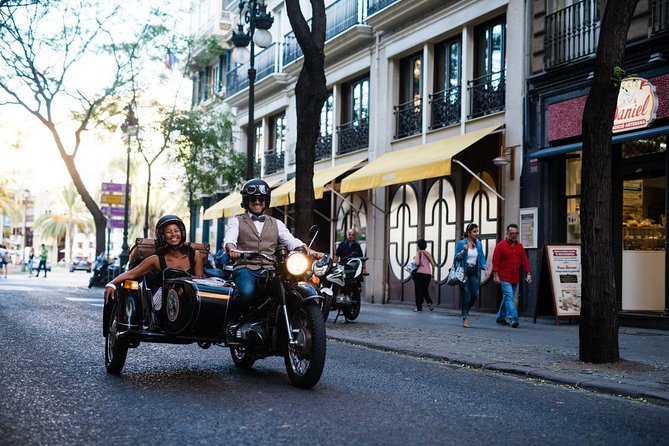
The best thing about this Valencia tour is the vintage sidecar. You move through the old town, port, beaches, and Cabanyal without sitting behind a bus window or walking between every sight. Guide Jan takes you down narrow lanes, past major landmarks, and out to the coast, all in one private outing.
I like the way the tour combines a fast city orientation with local detail. I also like the personal service: Jan has adjusted routes for photography, shared food suggestions, and even paused a tour when rain made riding unpleasant. The main catch is seating. One person rides behind the driver and another sits in the sidecar, so you should be clear about who wants the sidecar seat and understand that both people may not ride in it at once.
Key points to know before you book
- The route covers old Valencia and the coast: See the cathedral, Central Market, Silk Exchange, city gates, City of Arts and Sciences, Marina, beaches, and Cabanyal in one ride.
- Jan is the named local guide: Expect an English-language tour with history, neighborhood context, food advice, and a flexible approach to the route.
- The sidecar reaches narrow streets: It can slip into areas that buses and larger vehicles cannot, giving you a closer look at back streets and local districts.
- It is a private experience: Only your party rides with the guide, so the pace and stops can feel more personal than a standard group tour.
- The ride lasts about two and a half to three hours: That is enough for a broad overview, but not enough time to tour every attraction inside.
- Weather and seating matter: The tour needs good weather, and the heavier passenger sits in the sidecar. Groups weighing more than 200 kilograms are not advised to book.
Why a sidecar works so well in Valencia
Valencia is spread across several distinct areas. The medieval center sits inland, the City of Arts and Sciences is farther south, and the port, beaches, and Cabanyal lie beyond that. Seeing all of them on foot in one morning would be tiring. A regular walking tour would also miss much of the city between the sights.
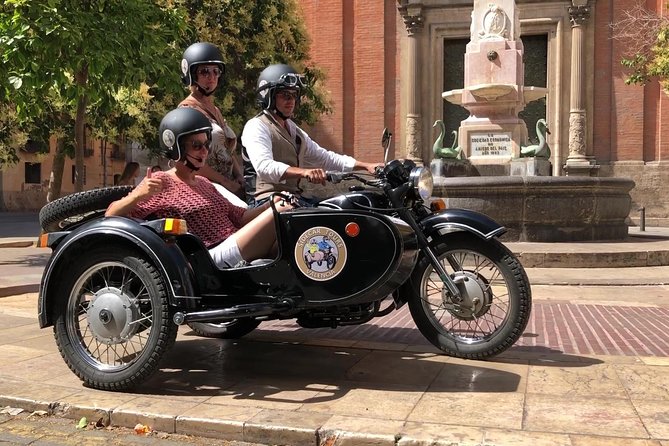
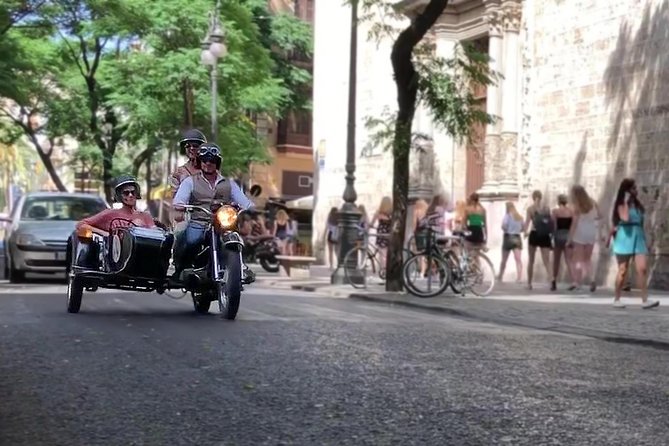
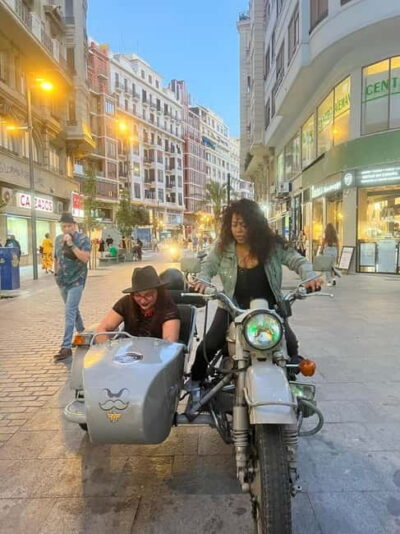
The sidecar solves that problem in a fun, slightly theatrical way. You get open views, fresh air, and a clear look at the streets around you. The vintage motorcycle also draws smiles and waves as it passes, which adds a social touch to the ride. You are not simply being moved from monument to monument. You are part of the street scene.
This is not a deep visit to any one attraction. Stops are generally short, often around five to ten minutes, with a longer pause of about 20 minutes at the City of Arts and Sciences. Think of it as a moving introduction and photo tour. I would use it early in your stay, then return later to the places you want to explore on foot.
The private format makes a real difference. Jan can explain a building, answer a question, or alter the route without waiting for a large group. The tour is offered in English, and the guide also gives suggestions for things to do and places to eat. Several parts of the route can be adapted, particularly if you have a special interest in photography or local neighborhoods.
More Vespa Sidecar Tours in Spain:
- Barcelona Private Tour by Sidecar Motorcycle
★ 5.0 · 1,750 reviews - Night Tour of Barcelona by Sidecar Motorcycle
★ 5.0 · 57 reviews - Barcelona: Half Day Tour on Sidecar Motorcycle
★ 5.0 · 39 reviews
Starting among Valencia’s grandest squares
The meeting point is Plaça d’Alfons el Magnànim, 2D, in Ciutat Vella. Hotel or apartment pickup is available within Valencia, which is useful if you are carrying luggage, staying outside the immediate center, or simply prefer not to find the starting point yourself.
The opening section focuses on the old city. At Valencia Cathedral, you get a short introduction and time for photographs. The stop is brief, and admission is not included, so do not expect to climb the tower or visit the interior during this tour. It is best treated as an orientation point and a chance to frame the cathedral with the surrounding streets.
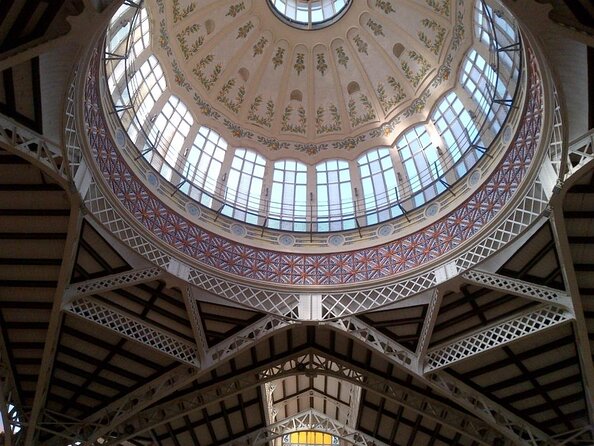
From there, the route reaches Mercat Central de Valencia. The market is free to enter, though the stop itself is only about ten minutes. That is enough to see the grand iron and glass exterior and get a sense of the market district, but you may want to return later when you have time to browse the food stalls at your own pace.
Next comes La Lonja de la Seda, the former silk exchange. The stop highlights the building and its sculptures, with admission not included. This is one of the most important historic buildings in the center, so note its location if you plan to come back for a proper visit.
The ride continues to Ajuntament de Valencia, the city hall, and the Edificio de Correos y Telégrafos. Both are free to view from the outside, and each receives roughly ten minutes. This is the sort of detail that makes the sidecar useful: you can cover several grand civic buildings quickly, take photographs, and hear how they fit into the city without spending your whole morning indoors.
From bullring mosaics to medieval gates
The route then shifts toward the area around the Plaza de Toros and Estació del Nord. The bullring is a major landmark near the center, while the railway station is known for its ceramic mosaics. The station stop is a good reminder that Valencia’s decoration is not limited to churches and palaces. Tiles and ceramics appear throughout the city, and the station gives you a particularly photogenic example.
The sidecar then heads toward the Torres de Quart. These Gothic towers are part of Valencia’s old defensive system, and the stop is short, about five minutes. You will not have time for a full architectural study, but Jan can point out the towers and their place in the former city walls.
Portal de Valldigna is a smaller stop with a different feel. It is a surviving medieval gateway, and you get about seven minutes to see it. This is one of the places where a narrow vehicle and local guide offer an advantage. It is easy to miss when you are following only the main tourist route.
The Torres dels Serrans follow, also with around five minutes for the tower known in English as Serranos Towers. Together with the Quart Towers, they help you understand the shape of old Valencia. You see the city not just as a collection of attractive buildings, but as a walled medieval settlement with entry points, markets, religious sites, and civic centers.
Do not judge these stops by their short timing. The point is not to replace a visit inside each monument. The point is to connect them, learn where they are, and decide which ones deserve a longer return visit.
The modern city at the City of Arts and Sciences
After the old center, the tour makes a sharp visual change at the Ciudad de las Artes y las Ciencias. Valencia’s modern landmark complex is among the most recognizable sights in the city, with sweeping white structures, water, and large public spaces. The stop lasts about 20 minutes, longer than most of the old-town pauses.
Admission to the museums is not included. That is sensible for a short overview, since visiting the complex properly could take much of a day. You can photograph the exterior and ask Jan how to plan a later visit if you want to see the museum areas from inside.
This is one of the strongest contrasts on the route. Within a few hours, you move from Gothic gates and a silk exchange to futuristic architecture. That range is one reason the sidecar tour works as a first look at Valencia. You are not left with the impression that the city belongs to only one period.
If photography matters to you, the open vehicle helps. You can see buildings without a bus window or a row of heads in front of you. A person who wants to stop for very specific photographs should discuss that with Jan before setting out, since the tour can be adjusted when timing permits.
More Vespa Tours with a Local Guide in Spain:
- Hoi An Vespa Tours: Hoi An Highlights and Hidden Gems
★ 5.0 · 382 reviews - Essential Ride by sidecar (Marrakech off the beaten path) 1h30
★ 5.0 · 244 reviews - The ORIGINAL Fiat 500 Tour of Rome’s 7 Hidden Gems
★ 5.0 · 172 reviews - Hoi An Vespa Food Tour: Authentic & Exotic Food Culture
★ 5.0 · 151 reviews
Out to the port, Marina, and Valencia’s beaches

The route continues to the Port of Valencia and La Marina de Valencia. Each receives about ten minutes, and admission is not included. These stops show the city from a more contemporary, open-air angle, with maritime spaces replacing the tight lanes of Ciutat Vella.
La Marina is also a useful place to understand Valencia’s relationship with the sea. You get more than a distant beach view. The route connects the port area with the public spaces and shoreline that locals use for walking, eating, and leisure.
From there, the motorcycle reaches Platja de la Malva-rosa and Playa de las Arenas. The Malvarrosa stop lasts around ten minutes, while Las Arenas and the Paseo Marítimo receive about five minutes. Both beaches are free to access, and the route lets you see how the city opens toward the Mediterranean.
La Fábrica de Hielo is listed as a one-minute stop. It is a fashionable bar and concert space rather than a major sightseeing monument, so think of this as a quick pointer to a local hangout. If you want to spend time there, save it for another visit.
The beach section is especially useful if you have only a short stay. You can see the coast without arranging separate transport, and you get a sense of the relationship between the center, port, and shoreline. Still, this is not a beach day. The stops are for viewing and orientation, not for swimming or lingering on the sand.
Cabanyal, the market, and Patacona
The final part of the route visits Barrio El Cabanyal, Mercado del Cabanyal, and Platja de la Patacona. Cabanyal gives you a different side of Valencia from the formal old center and polished modern complex. It is a neighborhood stop, where the value lies in seeing ordinary streets and local life rather than ticking off another grand monument.
The Mercado del Cabanyal receives only about one minute, so do not plan to shop there during the tour. Instead, note its location and return if you want time to look around. The market helps show that the coast is not only a line of hotels and promenades. It is also part of a working neighborhood.
The final beach stop is Patacona, with about ten minutes. It extends the coastal picture beyond Malvarrosa and Las Arenas. If the weather is clear, this closing section gives the ride a relaxed finish before returning to the starting point.
The whole route can take about two hours and 30 minutes to three hours. Timing may vary depending on traffic, photographs, questions, and the pace of your private group. The advertised stop times add up to more than a simple point-to-point ride, so treat them as approximate rather than a strict schedule.
What the ride feels like in practical terms

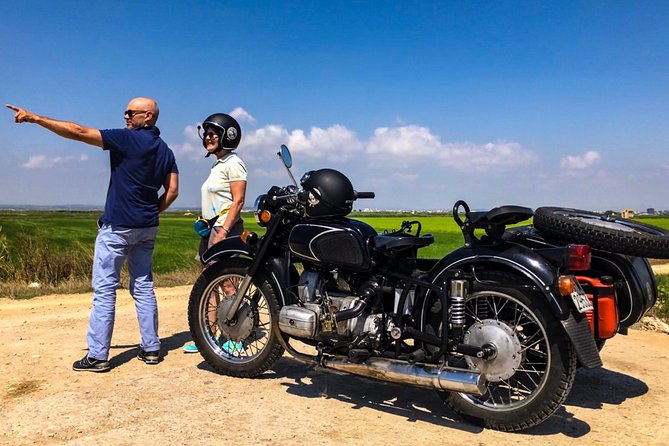
The motorcycle and sidecar are the attraction, but the seating arrangement deserves attention before you pay. The driver rides the motorcycle, one person sits behind the driver, and another sits in the sidecar. If two people share the tour, one will be on the pillion seat unless you swap during the ride.
The passenger behind the driver has a handle at the front of the seat. That small detail matters, especially if you are not used to motorcycle travel. You should also be comfortable with the fact that the sidecar is a moving vehicle, not a fixed sightseeing cabin.
The heaviest person in the group must sit in the sidecar, and the activity is not recommended for groups with a combined weight above 200 kilograms. This is a clear booking consideration, not a minor footnote. If you have concerns about comfort or balance, ask before confirming.
A helmet is included. Most people can participate, and the meeting point is near public transportation. The tour ends back at the meeting point unless hotel or apartment pickup arrangements change where you begin. The experience requires good weather, and a cancellation caused by poor weather brings a choice of a different date or a full refund.
The tour has a 4.9 rating from 116 ratings, with 98 percent of customers recommending it. That strong response fits the experience’s main strengths: the unusual vehicle, Jan’s friendly approach, broad coverage, and access to streets that larger vehicles cannot reach. One less positive account focused on the seating arrangement and confusion about pickup, which is exactly why you should confirm those details before the day.
Is the $119.73 price good value?
At $119.73 per person, this is not the cheapest way to see Valencia. You are paying for a private guide, a distinctive vehicle, a helmet, hotel or apartment pickup in Valencia when arranged, and a route that covers both the center and the coast.
The value depends on how you use the time. If you want a slow visit inside the cathedral, Silk Exchange, or museums, this will not replace admission tickets and several hours on foot. But if you have only a few days, the tour can save considerable time and give you a useful map of the city before you choose where to return.
It is also better value for people who care about the experience of getting around, not just the sights at the end. The vintage motorcycle attracts attention, provides open views, and lets you enter smaller streets. A standard sightseeing vehicle may cost less, but it will not offer the same access or personal format.
Group discounts are available, and the private setup means you are not sharing the guide with strangers. For a couple, family, or small group that wants a broad first look at Valencia, the price is easier to justify. For a solo visitor who only wants to photograph a few central monuments, the cost may feel high.
Who should book this sidecar tour?
I would recommend it to a first-time visitor who wants to get a quick sense of Valencia’s layout. It is also a strong match for photographers, people with limited time, and anyone who finds a normal walking tour too slow or tiring.
It suits visitors who enjoy local conversation as much as formal sightseeing. Jan’s route includes food and restaurant suggestions, neighborhood context, and practical ideas for what to do next. You may also enjoy it if you like unusual transport and do not mind drawing a few smiles from people along the street.
I would think twice if you dislike motorcycles, need a long stop at every monument, or want guaranteed sunshine without a weather backup. I would also clarify the pillion and sidecar seating before booking if the sidecar itself is the main reason you are interested.
Free cancellation is available up to 24 hours before the start time for a full refund. Changes or cancellations within 24 hours are not refunded, so keep the local cutoff in mind.
Should you book it?
Book this tour if you want to see old Valencia, the modern city, and the coast in one private ride. It is particularly useful at the start of a visit, when you can use Jan’s suggestions to plan the rest of your stay.
Skip it if your ideal outing means entering every monument or spending an hour at each market and beach. For most people who want a memorable orientation with a local guide, the vintage sidecar offers more personality and broader coverage than a standard city loop. Confirm the seating arrangement, choose a good-weather day, and you will know exactly what you are buying.
FAQ
How long does the Valencia sidecar tour last?
The experience lasts approximately two hours and 30 minutes to three hours. Stop lengths are approximate and may vary with traffic, photographs, questions, and the private group’s pace.
Where does the tour start and finish?
The listed meeting point is Plaça d’Alfons el Magnànim, 2D, in Ciutat Vella, Valencia. The activity ends back at the meeting point. Pickup from a hotel or apartment in Valencia is also offered.
Is the tour private?
Yes. Only your group participates in the activity.
Is the tour offered in English?
Yes. English is the listed language for the tour.
What is included in the price?
The price includes a helmet, a local guide, and useful information about things to do and restaurants. Admission to attractions such as Valencia Cathedral, La Lonja de la Seda, and the City of Arts and Sciences is not included.
How are passengers seated?
The driver rides the motorcycle, one person sits behind the driver, and another sits in the sidecar. You may be able to swap seats during the tour. The heaviest person in the group must sit in the sidecar.
What happens if the weather is bad?
The experience requires good weather. If poor weather causes cancellation, you will be offered another date or a full refund. You can cancel for a full refund up to 24 hours before the experience begins.
More Vespa City Highlights Tours in Spain
- Valencia: The Highlights Tour in Vintage Sidecar
★ 5.0 · 9 reviews - Madrid Highlights: Private Vintage Sidecar Tour (1 Hour)
★ 5.0 · 4 reviews - Rome: Highlights Vespa Sidecar Tour with Coffee and Gelato
★ 4.9 · 747 reviews - Rome Afternoon Sightseeing Vespa Sidecar Tour with Gourmet Gelato
★ 5.0 · 692 reviews
More Vespa Tours with a Driver in Spain
- Rome: Self-Driven Sightseeing Tour by Vespa
★ 4.9 · 240 reviews - Rome: Guided Vespa Tour with Self-Drive or as a Passenger
★ 4.9 · 167 reviews - Rome: Half-Day Tour by Vespa with Driver
★ 4.9 · 116 reviews - Rome: 1-Hour Vespa Ride as Passenger with a Local Driver
★ 5.0 · 104 reviews
Just added around Spain
- Valencia: The Highlights Tour in Vintage Sidecar★ 5.0 · 9 reviews
- The Ultimate Madrid Private Sidecar Experience (2 Hours)★ 5.0 · 5 reviews
- Vespa Spring 50cc rental★ 5.0 · 3 reviews
- Full-Day Barcelona Tour by Sidecar Motorcycle★ 5.0 · 15 reviews
- Madrid by Sidecar: The Ultimate Private Sidecar Tour (2 Hrs)★ 5.0 · 3 reviews
- Madrid Highlights: Private Vintage Sidecar Tour (1 Hour)★ 5.0 · 4 reviews
- Fiat 500 Boat Tours in Tenerife★ 5.0 · 3 reviews
- Barcelona: Motorcycle Sidecar Full-Day Tour with Stops★ 4.7 · 2 reviews
Spain Vespa Tours, compared.
Barcelona Private Tour by Sidecar Motorcycle
Read our review →


Maspalomas and Las Palmas: electric vintage scooter for rent
Read our review →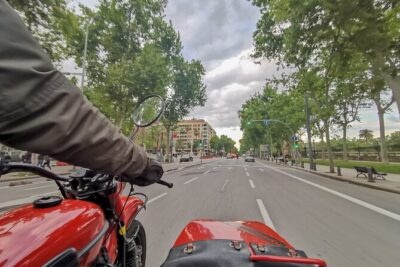
The Ultimate Madrid Private Sidecar Experience (2 Hours)
Read our review →Browse the lists this tour appears in