
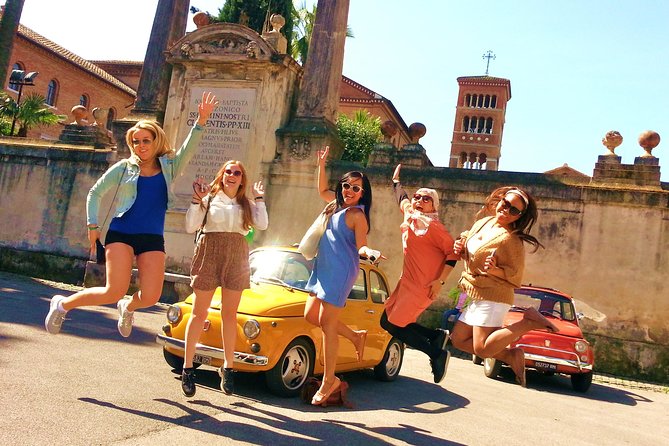
REVIEW · ROME
The ORIGINAL Fiat 500 Tour of Rome’s 7 Hidden Gems
Rome is at its most entertaining when you leave the big tour bus behind. In a tiny vintage Fiat 500, you slip through Trastevere’s narrow lanes, pause at the Aventine keyhole, and look across Rome from the Garden of the Oranges. I like the local scale of this experience and the way the little car turns an ordinary drive into part of the sightseeing.
I also like the mix of famous sights and lesser-known corners. You get the Colosseum and Circus Maximus, but also the Pyramid of Cestius and Monte Testaccio. Guides such as Alex, Alexis, Mike, Francesco, and Stephanie have been praised for lively storytelling and good photo help. The main caution is value: at $205.67 per person, this is a pricey three-hour outing, and the exact amount of time spent at each stop can vary.
Key points before you book
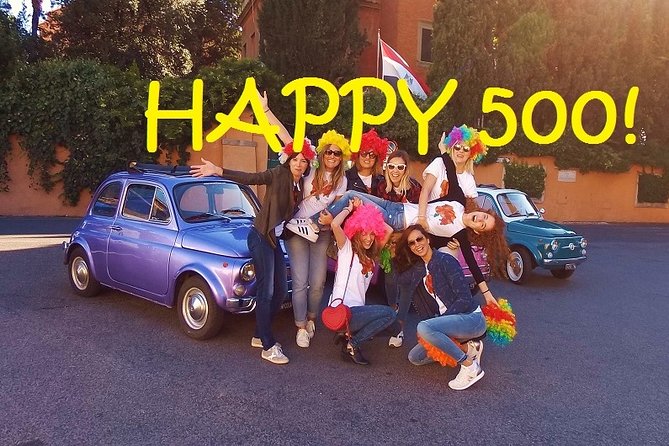
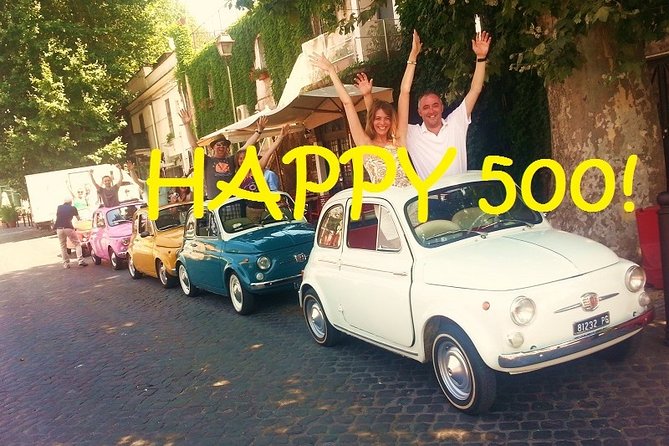
- A vintage Fiat is the star of the show: The car attracts smiles and camera phones as you pass through Rome.
- Nine major stops in about three hours: Expect short visits rather than long archaeological tours.
- A local guide adds the most value: Guides including Alex, Alexis, Mike, Francesco, and Stephanie have been singled out for humor, Roman knowledge, and helpful photos.
- You see Rome from above: The Aventine keyhole, Garden of the Oranges, and Piazzale Giuseppe Garibaldi offer some of the city’s best views.
- It is a shared convoy experience: The total group can reach 20 people, although each booking is limited to three people.
- Check the physical limits: The cars have no airbags, no safety belts in the rear seats, and the activity is not suitable for anyone weighing more than 100 kilograms.
Why a Fiat 500 changes the way you see Rome
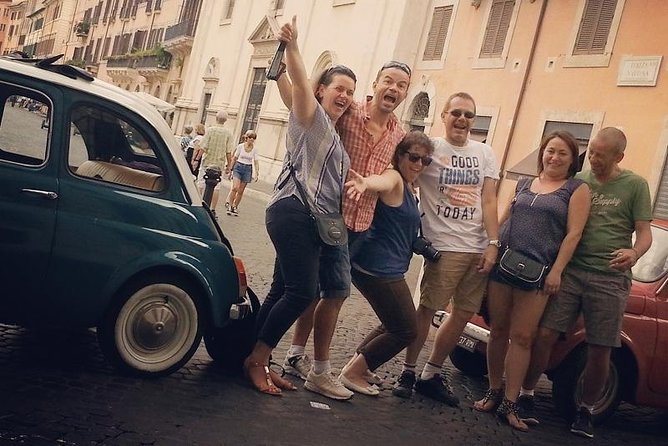
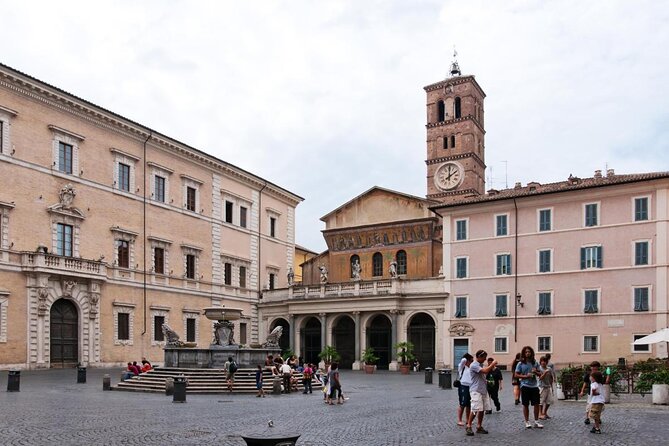
The Fiat 500 is not just transportation here. It is the conversation starter. You will be sitting in a piece of Italian motoring history while people on the sidewalks look over, smile, and take pictures. The car is small enough for streets where a coach would never fit, especially around Trastevere.
That charm matters because Rome can feel crowded and tiring when you move from one major monument to another in a large group. This tour keeps you close to street level. You pass through small lanes, piazzas, and older neighborhoods instead of spending the whole time on the main tourist routes.
The tour is shared, with as many as 20 people in the wider group, and it operates as a convoy of Fiat 500s. You are not booking a private car unless the group arrangement happens to work out that way. Each booking allows up to three people, and at least two people are required to book.
The driver is also your guide. That setup works best when the guide is warm and informed, and several named guides have made a strong impression. Alex and Alexis are praised for energy, humor, and Roman history. Mike is noted for speaking English, Spanish, and Italian. Francesco is remembered for making the history lively, while Stephanie is praised for clear explanations and taking excellent pictures.
The photo service is a useful touch. You can hand over your own phone or camera, and the guide will take pictures of you with the Fiat and the city behind you. That saves you from relying on hurried selfies.
More Vintage Fiat 500 Tours in Rome
- Rome: Photoshoot Service with Vintage Fiat 500
★ 5.0 · 611 reviews - Rome: Fiat 500 Vintage Photography Service in Rome
★ 4.9 · 308 reviews - Vintage Fiat 500 Cabriolet: Rome’s Highlight Semi Private Tour
★ 5.0 · 283 reviews
Caracalla: ancient Rome’s giant bathing complex
The first stop is the Baths of Caracalla, one of Rome’s largest ancient bathing complexes. The scale is hard to grasp until you see the wide ruins and imagine the whole site filled with hot and cold baths, libraries, exercise spaces, gardens, fountains, theaters, and rooms for lectures or meetings.
The complex covered an area roughly the size of 15 football pitches. It was not simply a place to wash. It was a public health and leisure center, built to impress and to give ordinary Romans a grand place to spend time.
You have about 20 minutes here, and admission is listed as free for this experience. That is enough for an introduction and photographs, but not enough for a slow archaeological visit. If Caracalla is high on your list, plan a separate return visit.
The short stop also tells you what kind of tour this is. You will see many places in one outing, but the guide will offer a concise explanation rather than a full museum-style presentation.
The Aventine keyhole and the Garden of the Oranges
At Piazza dei Cavalieri di Malta, you look through the famous keyhole toward St. Peter’s Basilica. The view lines up three countries: Italy, the Vatican, and Malta, represented by the property of the Knights of Malta.
It is a clever optical trick and one of the easiest photo stops in Rome. The Fiat adds a playful foreground, so you can take pictures of the car before or after looking through the keyhole. Because the stop is short, you may need to be ready to move when your guide calls the group back.
Nearby Parco Savello, usually called the Garden of the Oranges, gives you a broader view. From the terrace, St. Peter’s dome appears framed by the garden and Rome’s rooftops. The garden is also known as the Garden of the Lovers, a fitting nickname for one of the city’s most pleasant lookout points.
I like these two stops together. The keyhole is a quick visual surprise, while the garden gives you time to slow down and look across the city. They also show why a small-car tour can work well in Rome: the experience is built around viewpoints and short walks, not just monuments where you need a ticket and an hour inside.
Trastevere in a tiny car

Trastevere is where the Fiat 500 feels most useful. Its lanes are narrow, its streets can be awkward for larger vehicles, and the neighborhood rewards looking around rather than rushing toward a single sight.
You will drive through the area instead of taking a long walking tour. That means you get a quick sense of the streets, buildings, and daily rhythm, but you should not expect a detailed visit to every church or square.
This is also one of the most entertaining parts of the outing. The small car draws attention, and people often turn to watch the convoy pass. If you prefer to avoid attention, this may feel a little theatrical. If you like an experience that becomes part of the city scene, it is a great fit.
Same roads, a different ride:
- Vespa Sidecar Tour By Night with Pickup
★ 5.0 · 1,803 reviews - Rome Morning Vespa Sidecar Tour in Rome with Cappuccino
★ 5.0 · 1,771 reviews - Rome: Explore the City by Vespa with an Optional Photoshoot
★ 5.0 · 1,103 reviews - Rome Vespa Scooter Tour with Professional Photographer
★ 5.0 · 857 reviews
Piazzale Giuseppe Garibaldi and Rome from above
Piazzale Giuseppe Garibaldi sits on the Janiculum Hill and offers one of the broadest city views on the route. From here you can pick out the Colosseum, Pantheon, Altar of the Fatherland, and many of Rome’s church domes.
The view gives useful orientation. Rome’s landmarks can seem scattered when you visit them one at a time. From the hill, you begin to understand how the historic center, the river, and the surrounding neighborhoods fit together.
The stop is scheduled for about 20 minutes. Bring your own phone or camera ready, since this is one of the best places for a wide city photograph. The guide can also help with pictures of you and your group.
Circus Maximus and the roar of the chariots
Circus Maximus was built centuries before the Colosseum and became the main venue for chariot racing. At its height, it could hold roughly 250,000 people, a number that gives the open space its meaning even today.
The site is now a broad archaeological area rather than a complete stadium. Your guide will help you picture the track, the crowds, and the speed of the races. The space is also used for modern concerts, including performances by the Rolling Stones, Roger Waters, and Bruce Springsteen.
This is a good stop for context. Many people rush between the Colosseum and the Roman Forum without realizing that Circus Maximus was an even earlier center of mass entertainment. The visit is short, so you will get the story and the setting rather than a detailed excavation tour.
The Pyramid of Cestius at Porta San Paolo
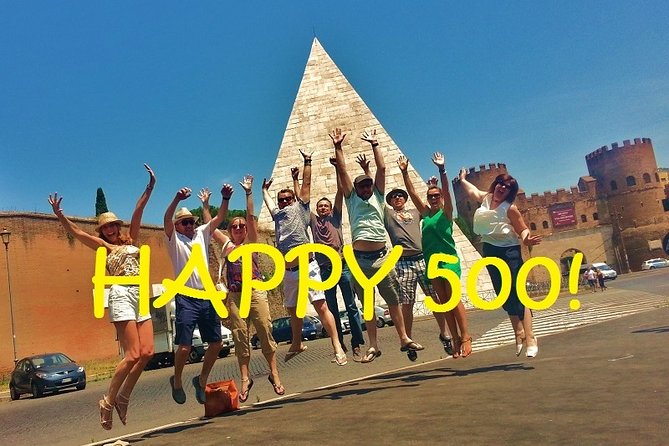
Rome’s ancient Egyptian-style pyramid is one of the city’s oddest sights. Built around 18 BCE, it served as the tomb of Gaius Cestius, a wealthy Roman who wanted something distinctive.
At Porta San Paolo, you see how Roman culture borrowed ideas from Egypt after Egypt became part of the Roman world. The pyramid is also a reminder that ancient Rome was not visually uniform. Alongside temples, arches, and baths, it had an Egyptian-style tomb beside a major city gate.
The stop is especially worthwhile if you have already seen the central monuments and want something different. It is not a substitute for going inside the Colosseum, but it gives you a memorable photograph and a story many first-time visitors miss.
The Colosseum: a look from the outside
The route includes the Colosseum, one of Rome’s defining monuments and one of the world’s most recognizable ancient buildings. Built around 80 CE, it hosted gladiatorial contests, executions, and naval spectacles during its long period of use.
The guide can explain the arena’s role in Roman public life and the scale of the crowds. The site also helps connect the earlier stop at Circus Maximus with the later age of amphitheater entertainment.
Be careful with your expectations. The published schedule gives the Colosseum a 20-minute stop, but one account of the experience reported not stopping there. That suggests the route can change with traffic, timing, or the convoy’s operation. You should treat the Colosseum as a drive-by or outside viewing opportunity, not as an included entrance visit.
No admission ticket is included for entering the monument. If you want the interior, book a separate timed visit and leave enough space in your day.
Monte Testaccio and the hill made from broken jars
Via Galvani brings you to Monte Testaccio, an artificial hill formed from broken Roman pottery. The vessels once carried olive oil, fish sauce, and wine. Over centuries, discarded pieces built a hill about 40 meters high and roughly 700 meters around.
The estimated total is astonishing: around 50 million broken vessels may have gone into its construction. This is not a palace or temple. It is an ancient dump that became an archaeological site and a record of how Rome was fed.
The stop adds a practical side to the tour. Instead of only seeing monuments built by emperors, you see evidence of shipping, food storage, trade, and ordinary consumption. The area is also linked with restaurants and a local cooling effect created by the pottery, making it one of the more unusual stops on the route.
Three hours, nine stops, and the question of value
The tour costs $205.67 per person, which puts it well above the price of a standard walking tour or a large-group bus outing. You are paying for the vintage vehicle, the driver-guide, the novelty of the convoy, the photo help, and the chance to cover a lot of Rome without walking between every site.
I think the price makes sense for a first visit when you value atmosphere and convenience more than long visits inside monuments. In three hours, you can see the Aventine, Janiculum Hill, Trastevere, Circus Maximus, the pyramid, the Colosseum area, and Monte Testaccio.
The value is weaker if your main goal is detailed historical study. Nine stops at roughly 20 minutes each leave little room for lingering. The schedule also leaves almost no spare time once driving is included, so the actual time at each place may shift.
The experience is booked, on average, 67 days ahead. That suggests you should not leave it until the last minute if the Fiat ride is a priority, especially if you need a particular departure time or want to travel during a busy season.
Morning and afternoon departures are available. A late outing may give you a pleasant change of light across the city, while a morning departure leaves more of the day open for museums and meals.
Practical details that matter
The meeting point is Via Labicana 125, Rome, and the tour ends back there. Do not assume hotel pickup. The stated meeting point is the reliable plan, even though one account described being picked up in a Fiat.
English is offered, and the guide may be multilingual. The quality of the narration will depend on the guide assigned to your convoy, so it is sensible to confirm the language you need when booking.
Most people can take part, but there are important limits. The rear seats have no safety belts, and the cars have no airbags. Anyone weighing more than 100 kilograms should not book this activity. If getting in and out of a very small classic car is difficult for you, choose a different way to see Rome.
Light refreshments are included. Free photo shooting with your own phone or camera is also included. Confirmation is normally sent at booking, though bookings made within 12 hours of departure are confirmed as soon as possible and depend on availability.
Free cancellation is available until 24 hours before the start time. A minimum of two people is required, and if the minimum is not met, you can be offered another date or a full refund.
Who will enjoy this Roman ride most?
I would choose this for a couple, a family with an older child or teenager, or a solo visitor who wants a social outing with strong photo opportunities. Several accounts describe teenagers enjoying the car, which makes it a smart way to add variety to a museum-heavy Rome trip.
It also suits repeat visitors. If you have already seen the Forum and Vatican Museums, the Aventine, Monte Testaccio, the pyramid, and the hilltop views offer something different.
I would be cautious if you want a private, quiet tour, a deep visit inside each monument, or a fully fixed schedule. The shared convoy can include up to 20 people, and the route may not match every listed stop exactly.
The experience has a 5 out of 5 rating from 172 ratings, with 99 percent recommending it. That is a strong booking signal, but the one-star account points to real risks: a guide with weak English, poor radio communication, and a mismatch over pickup arrangements. Confirm the meeting point and language before paying, and keep your expectations focused on a fun city ride rather than a formal archaeological tour.
Should you book the Fiat 500 tour?
Book it if you want to see Rome from street level, cover several districts in a short time, and enjoy the car as much as the monuments. The strongest part is the combination of local guides, hilltop views, narrow lanes, and photo stops that are hard to fit into a standard group tour.
Skip it if $205.67 feels high for three hours or if you need guaranteed time at the Colosseum and every listed stop. For the right person, this is a playful and efficient introduction to Rome’s less obvious corners. For a serious monument-focused visit, use it as an orientation ride, then return to the sites you want to explore properly.
FAQ
Where does the Fiat 500 tour start?
It starts at Via Labicana 125, 00184 Rome, Italy.
Where does the tour end?
The activity ends back at the meeting point on Via Labicana.
How long does the tour last?
The tour lasts approximately three hours.
How much does the tour cost?
The listed price is $205.67 per person.
How many people can join the tour?
The total activity can have a maximum of 20 participants. Each booking allows a maximum of three people, and at least two people are required per booking.
Is the tour offered in English?
Yes. English is offered, and the guide may also be multilingual.
Are morning and afternoon departures available?
Yes. You can choose a morning or afternoon departure time.
Does the tour include entry to the Colosseum or other monuments?
No admission tickets are listed as included. The tour provides outside visits and sightseeing stops, not guaranteed interior entry.
Are photos included?
Yes. The driver-guide offers free photo shooting using your own cellphone or camera.
Is the Fiat 500 tour suitable for everyone?
Most people can participate, but the cars have no airbags and no safety belts in the rear seats. The activity is not suitable for anyone weighing more than 100 kilograms.
Can I cancel for a full refund?
Yes. You can cancel at least 24 hours before the start time for a full refund. Changes or cancellations made less than 24 hours before departure are not accepted.
More Vespa Tours with a Local Guide in Rome
- Explore Rome on a Vespa: Uncover the City’s Hidden Gems
★ 5.0 · 113 reviews - Rome by Vespa – Vespa Tour with Local Guide Francesco
★ 4.5 · 73 reviews - Rome City Highlights & Hidden Gems: Vespa Sidecar Guided Tour
★ 5.0 · 72 reviews - Guided Vespa Tour of Rome – Ride a Vespa with a Local Guide
★ 5.0 · 64 reviews
Just added around Rome
- Vespa Tour with Professional Photographer★ 4.9 · 9 reviews
- Rome: Vespa Tour with Gelato and Photos★ 4.9 · 7 reviews
- Vespa tour with Professional Photoshoot★ 4.8 · 22 reviews
- Vespa Sidecar Tour: Highlights of Rome★ 4.7 · 10 reviews
- Food tour & Vespa tour & Photo tour! All included★ 5.0 · 2 reviews
- Vespa Tour – Explore Ancient Rome★ 5.0 · 5 reviews
- Vespa Sidecar Tour : Rome by Night★ 4.1 · 7 reviews
- Vespa Scooter Tour “Rome as a Local”★ 5.0 · 12 reviews
Rome Vespa Tours, compared.


Rome Morning Vespa Sidecar Tour in Rome with Cappuccino
Read our review →
Explore the City by Vespa with an Optional Photoshoot
Read our review →
Rome Vespa Scooter Tour with Professional Photographer
Read our review →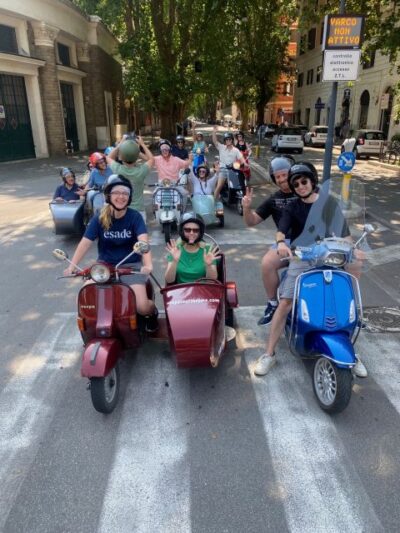
Highlights Vespa Sidecar Tour with Coffee and Gelato
Read our review →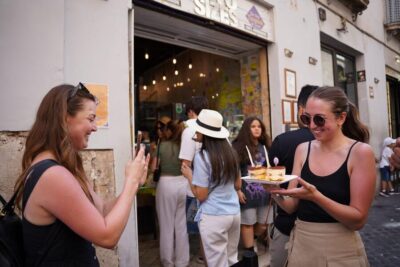
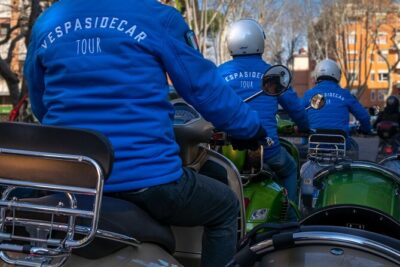
Rome Afternoon Sightseeing Vespa Sidecar Tour with Gourmet Gelato
Read our review →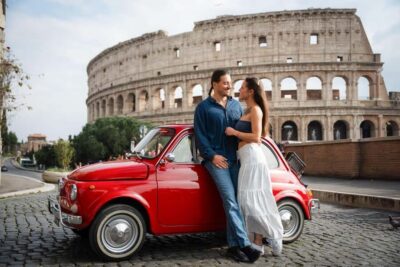
Browse the lists this tour appears in