

REVIEW · ROME
The ORIGINAL Fiat 500 3hour chauffeured tour
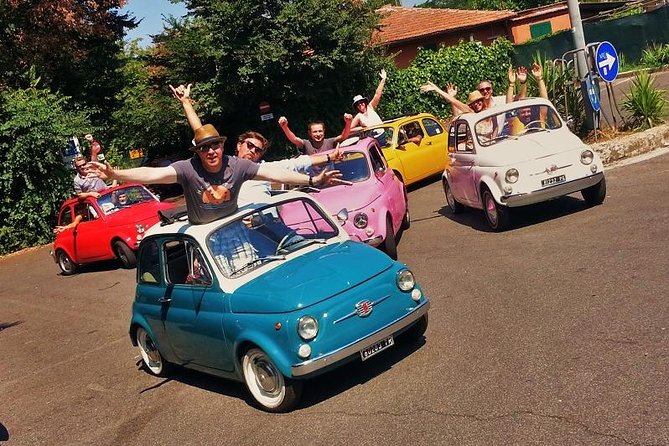
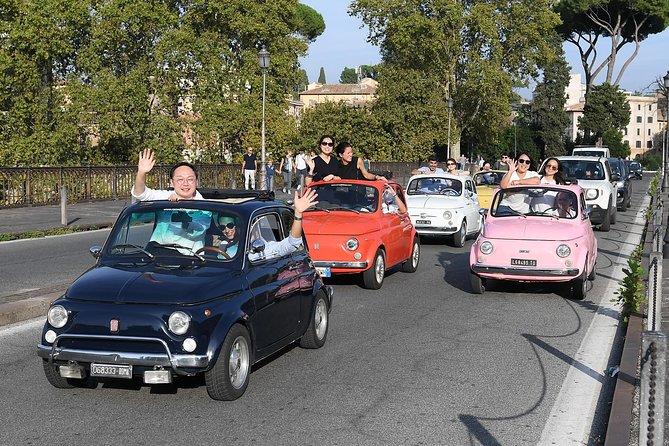
Rome looks different from a tiny vintage Fiat 500. You slip through narrow lanes, pause at grand viewpoints, and draw smiles as you pass. The tour covers major sights such as the Colosseum and Trevi Fountain area, but its best moments are the less expected stops: a keyhole view, an ancient pyramid, and a hill made from broken pottery.
I like the large amount of Rome covered in three hours, and I like that drivers such as Alex, Pier, Marco, and Alexis add photos, local tips, and lively stories rather than simply pointing at monuments. The main drawback is practical: the cars have no seat belts or airbags, and hotel pickup and drop-off are not included for hotels inside Rome’s central ZTL zone.
Key points to know before booking
- A vintage Fiat is the attraction as much as the transport: Expect a slow, photogenic ride in a classic Italian car that can reach lanes larger vehicles cannot.
- Nine stops pack a lot into three hours: Most stops last about 20 minutes, so this is a sightseeing sampler, not a series of long visits.
- You see Rome from above and below street level: Janiculum Hill and the Orange Garden provide wide views, while the Baths of Caracalla and Testaccio reveal older, less obvious Rome.
- The driver-guide shapes the experience: Alex, Pier, Marco, and Alexis are named in the supplied experiences, but your driver may be someone else.
- Photo help is part of the service: The driver can photograph you with your own camera, a real plus for couples and families.
- The price buys convenience, not museum entry: At $211.72 per person, the value rests in private-style transport, guiding, photos, and the number of sights covered.
Why a tiny Fiat is a smart way to see Rome
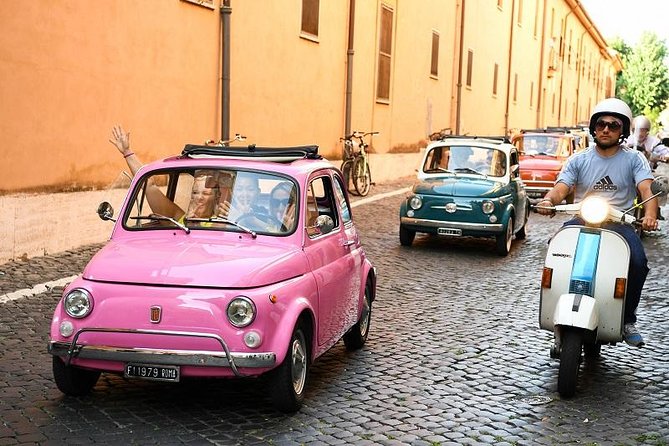
A standard sightseeing vehicle gives you a broad route. A Fiat 500 gives you a sense of Rome’s scale. The car is small enough for narrow streets, easy to photograph, and unmistakably Italian. You are not merely being driven between monuments. The vehicle becomes part of the day.
The three-hour length also works well as a first look at Rome. You can cover ancient ruins, hilltop views, Trastevere, the Colosseum, and Testaccio without spending the whole day on foot. If you have limited time, this is useful. If you have several days, it helps you decide where to return for a longer visit.
The format is more sightseeing ride than formal walking tour. At each stop, you get roughly 20 minutes to look around, hear an explanation, and take pictures. That rhythm keeps the outing moving, but it also means you will not explore the Baths of Caracalla or the Colosseum interior.
More Vintage Fiat 500 Tours in Rome
- Rome: Photoshoot Service with Vintage Fiat 500
★ 5.0 · 611 reviews - Rome: Fiat 500 Vintage Photography Service in Rome
★ 4.9 · 308 reviews - Vintage Fiat 500 Cabriolet: Rome’s Highlight Semi Private Tour
★ 5.0 · 283 reviews
Baths of Caracalla and the Circus Maximus
The tour begins with the Terme di Caracalla, the ruins of one of ancient Rome’s largest bath complexes. The site once covered an area described as roughly 15 football pitches. It was not just a place for bathing. Romans came here for hot and cold baths, exercise, libraries, gardens, fountains, theater, and meeting rooms.
You will have about 20 minutes at the stop, with no admission ticket included because the visit is an exterior sightseeing stop. That is enough for an introduction and photographs, not a full archaeological visit. If the baths are high on your Rome list, plan a separate visit when you can walk through the ruins at a slower pace.
Next comes the Circus Maximus, the enormous valley once used for chariot racing. It was built centuries before the Colosseum and could hold crowds on a scale that is hard to picture from the open ground today. Your driver may connect the site with the races portrayed in films such as Ben-Hur, while also pointing out its modern use for major concerts.
This stop is valuable because the Circus Maximus can be easy to overlook. There is no intact stadium rising before you, so a guide helps you understand the size and purpose of the space. Again, expect a brief stop and an explanation rather than a long archaeological walk.
The keyhole, Orange Garden, and Rome from above
At Buco della Serratura, you look through a famous keyhole toward the dome of St. Peter’s Basilica. The view lines up three countries in one frame: Italy, the grounds associated with the Knights of Malta, and Vatican City. It is a quick stop, but it gives you one of Rome’s most unusual photographs.
The keyhole is especially well suited to this tour because the Fiat itself adds to the picture. You can take photographs with the car, then make the short visit to the keyhole. Do not expect a large attraction with many rooms or displays. The pleasure is in the clever viewpoint.
Parco Savello, better known as the Orange Garden, offers a calmer pause. From the terrace, you get a broad look across Rome, with the dome of St. Peter’s creating the famous optical effect seen through the garden’s opening. The garden is also called the Garden of the Lovers, a fitting detail if you are marking an anniversary or traveling as a couple.
The Janiculum terrace at Piazzale Giuseppe Garibaldi gives you another wide panorama. From here, you can look toward the Colosseum, Pantheon, Altare della Patria, and Rome’s many church domes. These two viewpoints are not identical, so having both in the route gives you a better sense of the city’s hills and rooftops.
I would pay close attention during these stops if this is your first day in Rome. A city viewed from above is easier to understand. You begin to see how the ancient center, churches, monuments, and residential quarters fit together.
Trastevere by Fiat 500
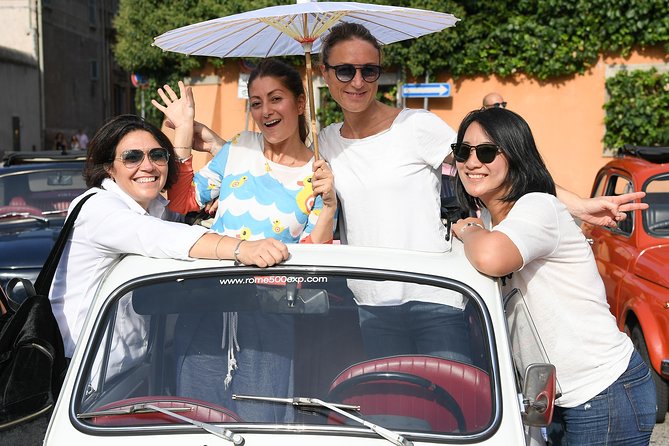
Trastevere is where the small car earns its keep. The area is known for narrow streets, and a tiny Fiat can move through spaces that would feel awkward in a larger vehicle. You will see Rome at street level, passing old lanes while people notice the colorful classic car.
The tour includes a break for an espresso or cappuccino. That pause matters. Three hours of constant sightseeing can feel hurried, so a short coffee stop gives you time to ask questions and catch your breath. The cost of the drink is not specifically stated, so treat the refreshments as a light inclusion rather than assuming every café order is covered.
This is also one of the stops where the driver’s personality matters most. Alex is described as combining historical facts with personal stories and taking many photographs. Pier is described as fun and engaging. Marco is noted for offering advice about pizza and carbonara. Those details suggest a guide who can make the route feel personal, though the assigned driver can vary.
Same roads, a different ride:
- Vespa Sidecar Tour By Night with Pickup
★ 5.0 · 1,803 reviews - Rome Morning Vespa Sidecar Tour in Rome with Cappuccino
★ 5.0 · 1,771 reviews - Rome: Explore the City by Vespa with an Optional Photoshoot
★ 5.0 · 1,103 reviews - Rome Vespa Scooter Tour with Professional Photographer
★ 5.0 · 857 reviews
The Pyramid of Cestius and Testaccio
Porta San Paolo brings an unexpected sight: the Pyramid of Cestius. Built in 18 BCE as the tomb of Gaius Cestius, a wealthy Roman, it is one of Rome’s clearest reminders that the ancient city absorbed influences from far beyond Italy.
The pyramid is not the sort of monument many people expect to find beside Rome’s ancient walls. It makes a strong photo stop and adds variety to the route. You move from imperial baths and chariot racing to an Egyptian-inspired tomb, all within the same city.
At Via Galvani, you visit Monte Testaccio, sometimes called the hill of broken vases. It is an artificial mound made from fragments of terracotta containers used to transport olive oil, wine, and fish sauce. The mound is estimated to contain pieces from about 50 million vessels and reaches roughly 40 meters high.
This stop gives you a look at everyday Roman commerce rather than imperial spectacle. The ancient city depended on huge supplies of food and drink, and the discarded containers left a permanent mark. Testaccio is one of the most useful stops for seeing how ordinary trade shaped Rome.
The Colosseum photo stop
The Colosseum is the route’s most famous sight. You stop in front of it for photographs and an explanation of its place in the development of stadiums. The amphitheater took about eight years to build and became the model for arenas across the Roman world.
The tour does not include entry to the Colosseum. That is an important distinction. You will see it from outside, hear context from the driver, and have time for photos, but you will not walk through its tunnels, seating levels, or arena floor as part of this experience.
I see that as both a limit and a strength. If you have already arranged a separate Colosseum visit, this stop gives you a convenient exterior view without repeating a full indoor tour. If this is your only Roman sightseeing activity, you will need another ticket and more time to experience the monument properly.
The driver’s ability to stop for photographs is one of the tour’s strongest features. Several accounts describe the guides taking memorable pictures, including photos tailored to the people in the car. Bring a camera or phone you are comfortable handing over briefly, since the included photo service uses your equipment.
How the price measures up

The listed price is $211.72 per person. That is not a cheap way to move around Rome, especially because admission tickets to the Colosseum and Baths of Caracalla are not included. You are paying for the classic vehicle, driver, guiding, photo help, refreshments, and a tightly planned route through several parts of the city.
For a couple, family, or small group that values convenience and photographs, the price can make sense. You cover far more ground than you could comfortably walk in three hours, and you avoid organizing several taxi rides. The tour also gives you a driver who can adjust the emphasis to your interests when conditions allow.
The value is weaker if you want lengthy visits inside monuments. A regular walking route through the historic center costs less, and public transport can take you to many major sights. This Fiat experience is best understood as a special transport and orientation tour, not an admission-based cultural tour.
The booking pattern suggests people often reserve it well ahead, with an average lead time of about 50 days. I would not leave it until the last minute if riding in the classic car is central to your Rome plans.
Practical details that affect your day
The meeting point is Via Labicana 125, near the Colosseum, and the activity returns there. Hotel pickup is available when your hotel is outside the central ZTL areas. If your hotel is inside the ZTL, pickup and drop-off are not included, so check the location before assuming the tour begins at your door.
The activity is offered in English. A minimum of two people is required, and the maximum booking size is 20, although the Fiat itself naturally limits how many people ride in each car at one time. The details supplied do not explain the exact vehicle arrangement for larger bookings, so confirm that point if you are booking for a group.
The cars have no seat belts or airbags. That is a serious consideration, not a footnote. The experience suits people who are comfortable with an old-style car and a more open, less protected ride. It is not suitable for anyone weighing more than 100 kilograms, or 220 pounds.
Most people can participate, and service animals are allowed. The route is near public transportation, which helps if you need to reach Via Labicana or return to your hotel after the tour.
Free cancellation is available up to 24 hours before the start time. Changes or cancellations inside that window are not accepted for a refund. The experience also requires a minimum number of bookings, so if the operator cancels for that reason, you are offered another date or experience, or a full refund.
Who should book the Fiat 500 tour?
I would choose this for a first visit to Rome, a short stay, or a special occasion. It works particularly well for couples who want photos, families who need a break from long walks, and anyone who wants an entertaining overview before choosing which places to revisit.
It also suits you if you enjoy local character more than a standard sightseeing bus. The keyhole, Orange Garden, Pyramid of Cestius, and Testaccio provide a different mix from the usual central Rome circuit.
I would hesitate if you require modern vehicle safety features, want a full indoor tour of the Colosseum, or prefer to spend an hour or more at each site. The route is quick, and the open-air stops depend on the weather and your comfort with a small vintage car.
Should you book it?
Book this tour if you want Rome in concentrated form, with a memorable car, broad views, unusual stops, and a driver who can make the stories lively. Alex, Pier, Marco, and Alexis are all associated with especially warm and personal guiding in the supplied details, though your driver may differ.
Skip it if your priority is the lowest possible price or detailed monument entry. For everyone else, the combination of nine varied stops, photo help, coffee time, and a classic Fiat makes this a strong three-hour introduction to Rome, as long as you understand that you are seeing the sights from outside rather than touring their interiors.
FAQ
How long is the Fiat 500 tour?
The tour lasts approximately three hours.
Where does the activity begin?
It begins at Via Labicana, 125, 00184 Roma RM, Italy.
Where does the tour finish?
The activity ends back at the meeting point.
Is hotel pickup included?
Hotel pickup and drop-off are included when the hotel is outside Rome’s central ZTL areas. They are not included for hotels located inside those areas.
What language is the tour offered in?
The experience is offered in English.
How many people are required to book?
A minimum of two people per booking is required.
What is the maximum group size?
The activity can have a maximum of 20 travelers.
Are monument admission tickets included?
No admission tickets are listed as included. The experience provides exterior sightseeing stops, explanations, and photographs.
Does the car have seat belts or airbags?
No. The cars have neither seat belts nor airbags.
Is the tour suitable for everyone?
Most people can participate, and service animals are allowed. The activity is not suitable for anyone weighing more than 100 kilograms, or 220 pounds.
What is the cancellation policy?
You can cancel up to 24 hours before the start time for a full refund. Cancellations or changes made less than 24 hours before the start time are not accepted for a refund.
Just added around Rome
- Vespa Tour with Professional Photographer★ 4.9 · 9 reviews
- Rome: Vespa Tour with Gelato and Photos★ 4.9 · 7 reviews
- Vespa tour with Professional Photoshoot★ 4.8 · 22 reviews
- Vespa Sidecar Tour: Highlights of Rome★ 4.7 · 10 reviews
- Food tour & Vespa tour & Photo tour! All included★ 5.0 · 2 reviews
- Vespa Tour – Explore Ancient Rome★ 5.0 · 5 reviews
- Vespa Sidecar Tour : Rome by Night★ 4.1 · 7 reviews
- Vespa Scooter Tour “Rome as a Local”★ 5.0 · 12 reviews
Rome Vespa Tours, compared.


Rome Morning Vespa Sidecar Tour in Rome with Cappuccino
Read our review →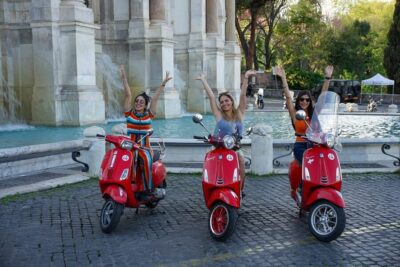
Explore the City by Vespa with an Optional Photoshoot
Read our review →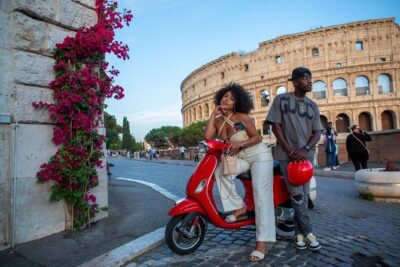
Rome Vespa Scooter Tour with Professional Photographer
Read our review →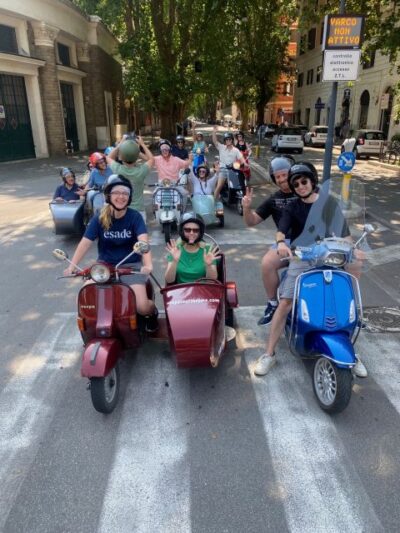
Highlights Vespa Sidecar Tour with Coffee and Gelato
Read our review →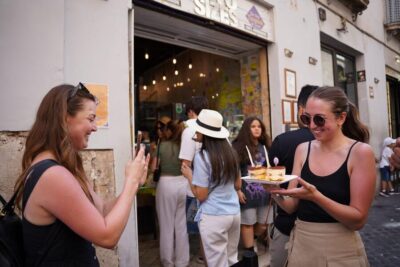
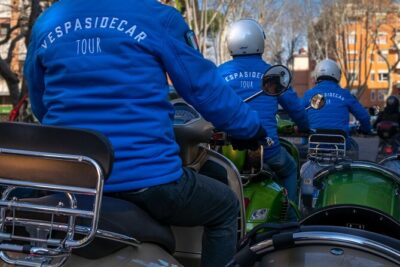
Rome Afternoon Sightseeing Vespa Sidecar Tour with Gourmet Gelato
Read our review →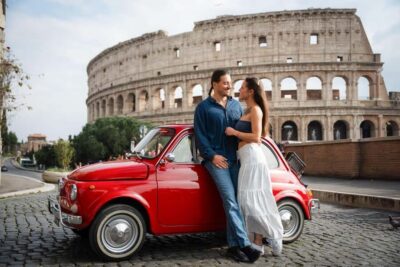
Browse the lists this tour appears in