
REVIEW · PORTUGAL
Évora Unforgetable Sidecar Tour
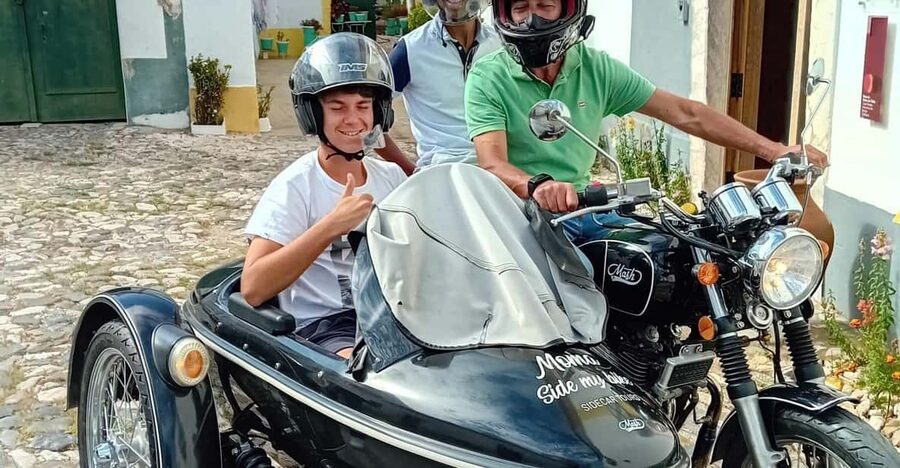
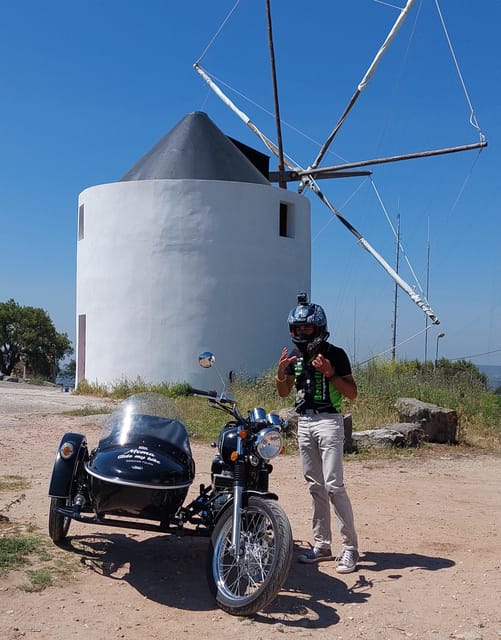
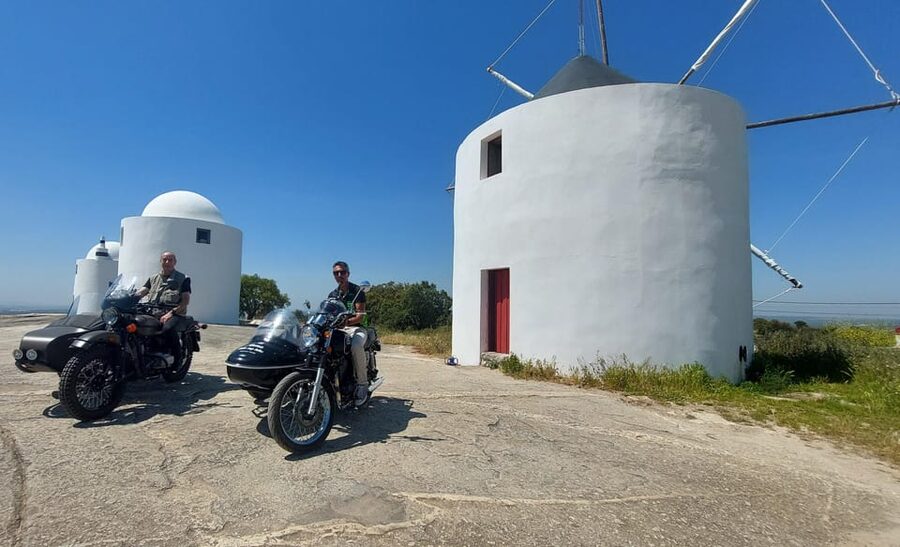
Évora’s long story becomes much easier to grasp from a motorcycle sidecar. You begin above town near the windmills of Alto de São Bento, then roll past Roman ruins, medieval walls, Muslim-era traces, royal buildings, cork shops, and old fountains before finishing at a café dating from the early 20th century. It is an unusual way to connect the city’s many layers without spending three hours on foot.
I like the high viewpoint at Alto de São Bento, which gives you an immediate sense of Évora’s setting, and I like the way guide Paulo links the Celtic, Roman, Visigothic, Muslim, and Portuguese periods instead of treating each monument as an isolated stop. The ride also covers a lot of ground quickly, with helmets connected by Bluetooth so you can hear the commentary as you go.
The main consideration is that this is a sightseeing ride, not a museum tour. You see the major buildings from outside, apart from the offered Évora Museum entrance, and a motorcycle sidecar may not suit everyone. If you prefer slow walks and long interior visits, this should be your introduction to Évora, not your only activity.
Key points to know before you book
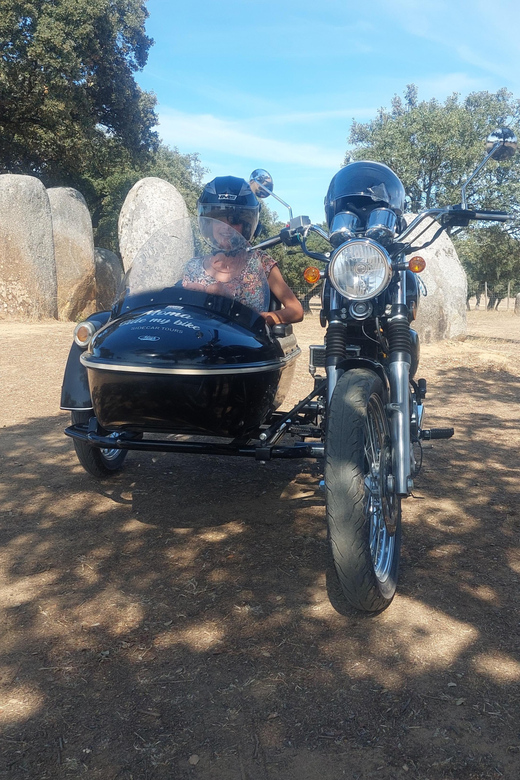
- Alto de São Bento starts the story: Begin near the windmills and look down over Évora before entering the old town.
- One ride covers many eras: Celtic, Roman, Visigothic, Muslim, medieval, Renaissance, and 17th-century landmarks all appear in the route.
- Paulo is the guide and driver: He speaks English, Spanish, and Portuguese, and uses Bluetooth-connected helmets for commentary.
- You see Évora efficiently: The three-hour route circles the city, its walls, towers, squares, aqueduct, and major monuments.
- The tour is private: Pickup and drop-off can be arranged in Évora, including hotels in the city and outskirts.
- The finish is atmospheric: The ride ends at a café from the beginning of the 20th century, with time to talk about local food and wine.
Why a sidecar works well in Évora
Évora’s historic center is compact, but its story reaches far beyond the main square. A walk can take you to the Roman Temple, cathedral, and Giraldo Square, yet it is harder to reach the outer walls, viewpoints, aqueduct, windmills, and later fortifications in one outing.
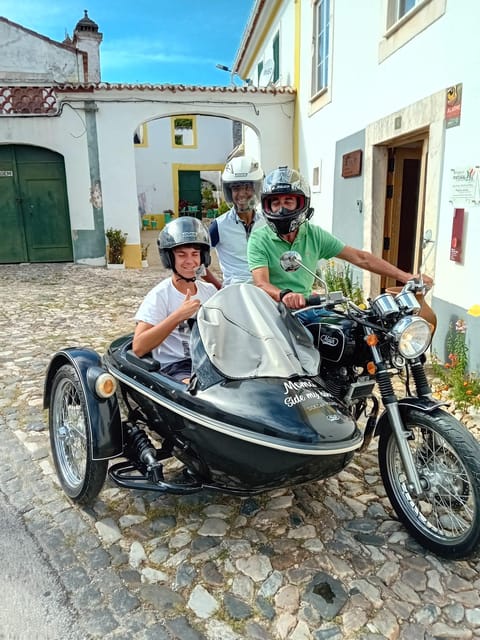
The sidecar solves that problem. You sit above street level, feel the breeze, and move between the hill outside town and the old center without arranging separate transport. The route lasts at least three hours, so it is not a quick spin around the square. You get a broad introduction to the city, with short stops for views, photographs, and explanations.
Paulo drives and guides. His approach is strongly story-based, with attention to dates, names, and the way Évora changed hands and identities over time. Bluetooth-connected helmets let you hear him while the motorcycle is moving, which is important on a sightseeing ride. Without that connection, the road noise would make a history lesson rather difficult.
The private format is another advantage. You are not being moved around in a large group, and the pickup point can be adjusted. The stated pickup choices are the Chapel of Bones and Jardim Público, but Paulo can also collect you at a hotel in Évora or on the outskirts of the city. Drop-off can be arranged in the same general way.
More Vespa Sidecar Tours in Portugal
- Private Tour: Best of Lisbon by Sidecar
★ 5.0 · 377 reviews - Madeira Sidecar Adventure – Old West Road (1 or 2 Persons)
★ 5.0 · 228 reviews - Lisbon: Sidecar Tour
★ 5.0 · 123 reviews
Alto de São Bento and the first settlers
The tour begins near the windmills at Alto de São Bento, outside the medieval core. This opening stop gives you a useful view over Évora before the monuments begin to crowd your attention.
The area is connected with the Celtic people known as the Eborones, described as the first settlers in the tour’s historical account. That name helps explain the older roots behind Évora and its later Roman identity. From the hill, you can see the city as a settlement with layers added over time rather than as a single preserved medieval town.
There is a safety briefing and photo stop here, taking about 15 minutes. That pause matters because the sidecar is not simply a taxi with a roof. You will be riding on a motorcycle, wearing a helmet, and listening through a connected communication system. Use this moment to settle in and ask Paulo how the ride will work.
The hill is also a good test of the experience. If you enjoy open-air transport, views, and a little novelty, the setting gets the tour off to a strong start. If you dislike motorcycles or feel uneasy on exposed seating, you will know early that the format may not be right for you.
Roman Évora: walls, temple, and Sertório Tower
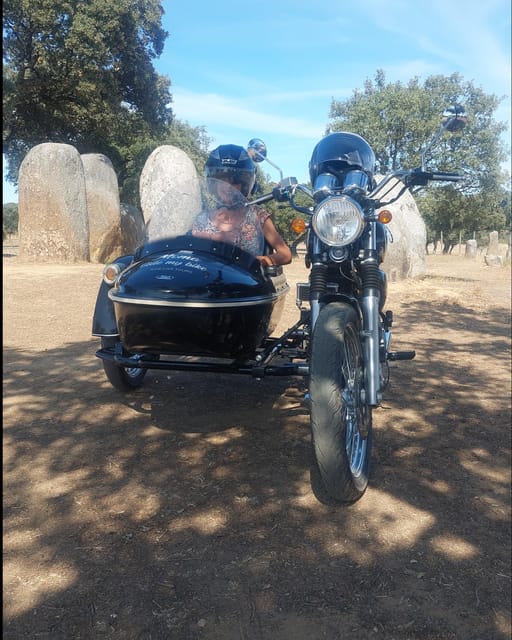
From Alto de São Bento, the route heads toward the Roman remains and the old battlements. Évora was known in Roman times as Ébora Liberalitas Julia, and Paulo uses the surviving structures to explain how the Roman city shaped what came later.
The Roman Temple is the headline stop. Its familiar columns are among Évora’s best-known sights, but seeing it as part of the old defensive and civic setting gives it more meaning. The ride also passes the ancient battlement walls and Sertório Tower, linking the grand temple with the practical structures that protected and organized the settlement.
You will not go inside the major monuments during the standard general tour. That is worth understanding before booking. The sidecar gives you context, exterior views, and access to more of the city in one sitting, but it does not replace an afternoon spent inside the cathedral or museum.
The tradeoff is fair for many people. You can cover a large area without tiring your feet, then return later to the interiors that interest you most. The tour is especially useful on a first morning or afternoon in Évora, when you want to learn the city’s layout before choosing where to spend more time.
From Visigothic traces to Yeborah
The route continues into the old citadel and the period when Évora was known as Yeborah. The tour presents the Visigothic and Muslim periods as part of the city’s continuing development, not as disconnected chapters.
This is one of the stronger reasons to take the ride with a guide. Évora’s buildings do not always announce which period they belong to, and architectural details can be easy to miss from street level. Paulo’s explanations help you follow the changes in power, religion, urban planning, and building style.
The tour then moves toward the year 1166 and the first Foral of Évora. A foral was a royal charter that set out rights and duties for a town, so this moment marks Évora’s place in the medieval Portuguese kingdom. The exact dates and names can blur when you explore alone. Hearing them while moving through the actual streets makes the sequence easier to remember.
Because the tour is private, you can ask for clarification instead of waiting for a guide to finish a prepared speech. That is useful if you have a particular interest in Roman archaeology, medieval Portugal, architecture, or the city’s Muslim legacy.
Same roads, a different ride:
- Highlights of Porto on a glamorous sidecar – Half Day
★ 5.0 · 108 reviews - Vespa Primavera 24 Hour Rental in Madeira
★ 5.0 · 65 reviews - Madeira Island: 3-Hour Old Road Tour by Sidecar
★ 5.0 · 60 reviews - Half-Day Private Sidecar Tour on Madeira’s West Coast
★ 5.0 · 41 reviews
Cathedral Square and the city’s changing styles
Near the 13th-century cathedral, the route reaches one of the most concentrated groups of historic buildings in Évora. The cathedral itself combines Romanesque and Gothic elements on the outside, a detail that gives you a quick lesson in how Portuguese architecture developed across long building periods.
The square also includes the Lóios Monastery, the Évora Museum, and the structure identified in the tour information as the Duana Temple. You will see these sites from the outside during the general ride, while Paulo explains their role and appearance.
The Évora Museum is the exception to the usual no-interior policy. For the general sidecar tour, the operator offers free entrance for two people. Since the ride itself does not include interior visits to every monument, this offer adds some value, particularly if you want to follow the street tour with a museum visit.
You should clarify the timing of that museum entrance with Paulo if it matters to your plans. The main tour lasts at least three hours, and the supplied details do not state whether the museum visit happens during the ride or afterward. Still, it is a useful extra rather than an empty promise of seeing everything from the road.
Walls, towers, and 17th-century defenses
Évora’s walls are not just a backdrop for the old center. The ride goes around the medieval walls and towers, then continues to the fortifications built in the 17th century. This broader circuit helps you understand the city’s scale and defensive needs.
The route includes the Tower of Sisebuto, along with other towers and wall sections. From a sidecar, you can cover these outer areas without giving up the central sights. That is a practical gain in a hot or busy sightseeing day, when walking the full perimeter might feel like work rather than fun.
The ride also brings you to Portas de Moura and the Silver Aqueduct. The aqueduct and fountains show how water shaped daily life and urban design. Portas de Moura adds another view of the old city’s gateways and movement between districts.
These are the stops that can get lost on a standard first visit. Many people walk directly between the cathedral, Roman Temple, and main square. This ride widens the picture and shows the structures that made Évora livable, defensible, and connected.
D. Manuel Palace and Portugal’s golden age
The D. Manuel Palace dates from the 15th century and represents Portugal’s Golden Age. Its Manuelino style is one of the tour’s clearest examples of the country’s distinctive late Gothic decoration and royal ambition.
Again, you see the palace from outside rather than touring its rooms. That means the value lies in the explanation and the quick visual comparison with Évora’s Romanesque, Gothic, Muslim, and defensive buildings. The sidecar format works well here because you can move from an ancient ruin to a royal palace in a short time, making the contrast obvious.
The ride then includes Giraldo Square, one of Évora’s central gathering places. This is where the city’s public life and architectural history meet. You also get a short walk in the old city, which gives you time to look more closely at the difference between older structures and newer additions.
That walk is important. Three hours on a motorcycle can show you a lot, but it cannot replace being on foot. You can browse shops selling cork goods and other locally made products, and get a feel for Évora as a working crafts town rather than a collection of monuments.
Food, cork, and the final café
The final part turns from buildings to everyday culture. Paulo shares information about local gastronomy and wines, then finishes the route at a café dating from the start of the 20th century.
The café ending gives the tour a natural pause. You are not simply dropped at the last monument and left to work out what you have seen. Instead, you can talk through Évora’s food, wine, and regional identity in a setting with its own historical character.
The Jardim Público is part of the pickup and drop-off arrangement, and the garden adds a pleasant close to the route. One unusual detail from the experience is the presence of peacocks there, so keep an eye out if you finish nearby. It is a small touch, but it gives the end of the ride some character.
The food discussion is not presented as a cooking class or tasting session. Think of it as useful orientation. Paulo can point you toward the flavors and wines that belong to the Alentejo, while you decide where to eat later.
Price, timing, and practical value
The stated price is $53 per group of up to one. That wording is unusual, so I would confirm the final price and passenger arrangement before paying, especially if two customers plan to ride. The experience information also refers to two travelers receiving free Évora Museum entrance, and the ride is described as a private group activity.
At that price, the value comes from combining a private guide, transport, citywide coverage, and a three-hour history lesson. You are paying for more than a point-to-point transfer, but less than a full day of private guiding. The ability to arrange hotel pickup in Évora or its outskirts also saves time and makes the outing easier to fit into a short stay.
The tour runs in English, Spanish, or Portuguese. Free cancellation is available up to 24 hours before the start, and you can reserve now and pay later. Availability and starting times should be checked before you commit, since the supplied details do not give a fixed daily schedule.
The standard route does not include interior visits to all the monuments. You should budget separate time for the cathedral, Roman Temple area, Évora Museum, or any other building you want to explore inside. The offered museum admission for two helps, but it does not turn the ride into a complete indoor sightseeing pass.
Who will enjoy this sidecar tour?
I would recommend it most strongly to first-time visitors who want a fast but thoughtful introduction to Évora. It is also a good match for couples, private groups, and anyone who finds a normal walking tour too slow or tiring.
You will get the most from it if you like hearing dates, names, and connections between different eras. Paulo’s strength is explaining the city in detail, so this is not the right choice if you want only a silent scenic ride.
Motorcycle fans may enjoy the novelty, although one passenger specifically noted that a motorcyclist riding as the passenger might wish to drive instead. That is a fair warning: the fun comes from being carried through the city, not from controlling the bike.
The sidecar is comfortable according to the available experience details, but you should still be happy riding outdoors and wearing a helmet. The tour is not described as wheelchair accessible, and no specific accessibility information is provided, so ask the operator directly if you have mobility concerns.
Should you book the Évora Unforgettable Sidecar Tour?
Book it if you want a personal introduction to Évora’s full timeline, from the Eborones and Roman Ébora Liberalitas Julia to Muslim Yeborah, medieval Portugal, royal Manuelino architecture, and 17th-century defenses.
I especially like it as an early activity in a stay. You get the high view, the city layout, the main monuments, the outer walls, and practical ideas about food, wine, cork, and museums. Then you can return on foot to the interiors that caught your attention.
Skip it if your main goal is detailed time inside monuments, or if motorcycles make you uncomfortable. For everyone else, Paulo’s detailed guiding, flexible pickup, and unusual route make this a memorable way to understand Évora without wearing out your legs.
FAQ
How long does the Évora sidecar tour last?
The tour lasts at least three hours.
Where can the tour start?
The listed pickup options are the Chapel of Bones and Jardim Público. Pickup can also be arranged at hotels in Évora or on the outskirts of the city.
Where does the tour finish?
The listed drop-off options are Jardim Público and the Chapel of Bones. Hotel drop-off in Évora or the outskirts can also be arranged.
What languages does Paulo speak?
The tour is available in English, Spanish, and Portuguese.
Is the tour private?
Yes. The activity is offered for a private group.
Do I ride in a motorcycle sidecar?
Yes. The experience uses a motorcycle sidecar, and helmets are connected by Bluetooth so you can hear the guide.
Does the tour go inside the monuments?
The general sidecar tour visits the important monuments from outside and does not include interior visits to all the buildings.
Is museum entry included?
For the general tour, free entrance to the Évora Museum is offered for two people.
Does the tour include hotel pickup?
Yes. Paulo can pick you up at hotels in Évora or in the outskirts of the city.
Can I cancel for a full refund?
Yes. You can cancel up to 24 hours in advance for a full refund. You can also reserve now and pay later.
Just added around Portugal
- Private Tour of Piaggio Ape Calesino★ 5.0 · 2 reviews
- Lisbon – Private Vintage Sidecar Tour to Sesimbra’s Coast★ 5.0 · 13 reviews
- Private Sidecar Sunset & Drinks!★ 5.0 · 16 reviews
- Lisbon by Fiat 500 Jolly convertible!!★ 5.0 · 4 reviews
- Lisbon: Private Experience Motorcycle Sidecar Tour★ 5.0 · 14 reviews
- Private Vespa West Tour-Seixal,São Vicente,Porto Moniz(4hr)★ 5.0 · 4 reviews
- Private Vespa Tour Nun´s Valley,Câmara Lobos,CaboGirão(4hrs)★ 5.0 · 6 reviews
- Porto Private Sidecar Tour★ 5.0 · 18 reviews
Portugal Vespa Tours, compared.
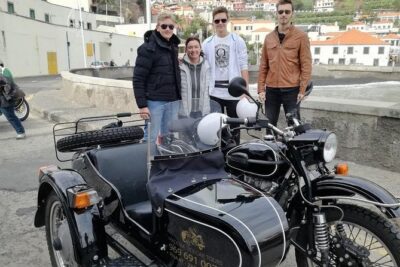
Madeira Sidecar Adventure – Old West Road (1 or 2 Persons)
Read our review →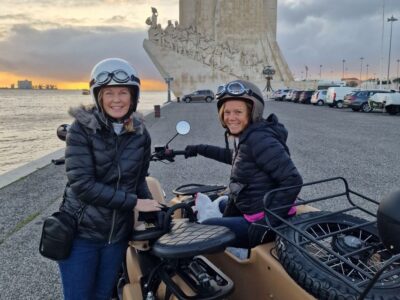
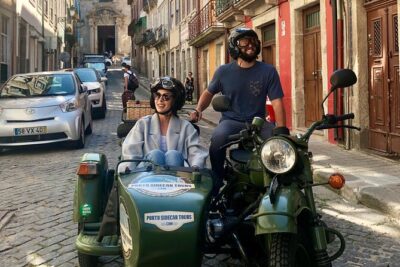
Highlights of Porto on a glamorous sidecar – Half Day
Read our review →
Browse the lists this tour appears in