
REVIEW · PORTUGAL
Megalithic & Medieval tour on a sidecar Évora
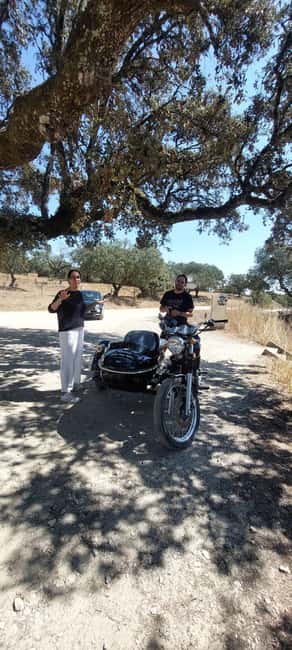
Évora’s ancient stones and royal past make a fine day of sightseeing, but the sidecar ride is what changes the pace. You travel through the Alentejo countryside in the open air, with Paulo explaining the sites through a connected helmet headset while cork trees and old roads pass by.
I like two things in particular: the visit to Almendres Cromlech and its menhir, and Paulo’s clear storytelling about Évora’s Roman, Visigothic, Muslim, and Renaissance eras. He also takes photographs during the outing, a useful touch when you are busy enjoying the ride. The main drawback is comfort: a tall passenger or anyone with back problems may find the sidecar a poor fit.
Key points at a glance
- Almendres Cromlech and menhir: Begin with Évora’s remarkable megalithic remains outside the city.
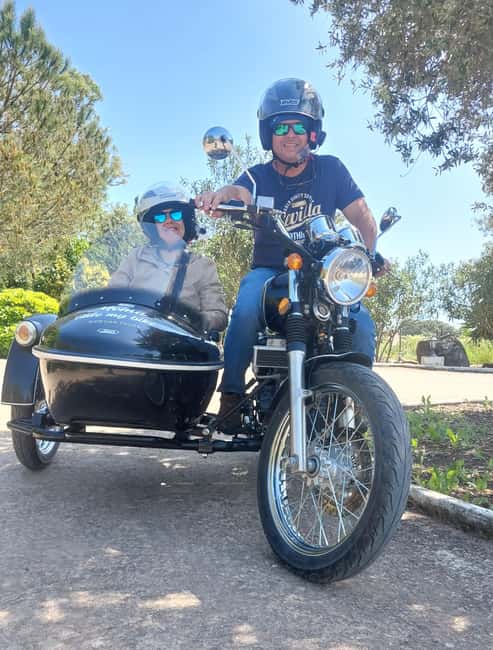
- Paulo’s live narration: Hear the story while riding through a helmet microphone and headset system.
- Évora’s long timeline: Move from the Eborones and Roman foundations through Muslim rule and Portugal’s Golden Age.
- Private three-hour outing: The ride is arranged for a private group, not a large coach party.
- Sidecar photographs: Paulo pauses to take pictures, so you can keep a record of the experience.
- Good value at $47: The price includes the tour, guide, and ride, though lunch is extra.
Why a sidecar changes the Évora experience
Évora is easy to admire on foot, but the city’s wider setting matters. The old center sits within the broad Alentejo countryside, where cork trees, open fields, and prehistoric monuments give the region its character. A sidecar lets you connect those pieces without arranging a separate taxi or rental car.
You are not simply being driven from one attraction to another. Paulo talks as you go, using a microphone and headset so you can hear him over the motor. The system has had occasional Bluetooth trouble, but he has handled it during the ride. That means the history continues between stops instead of appearing only in short bursts at monuments.
The vehicle is also part of the appeal. A sidecar is unusual, social, and a little theatrical without turning the trip into a theme-park ride. You get a close view of the road and countryside, and Paulo can stop at important places to explain what you are seeing.
This is a private experience, so the tone can be more personal than a standard group excursion. You can ask questions, take in the views, and let the guide adjust the rhythm of the visit within the three-hour time limit.
More Vespa Sidecar Tours in Portugal
- Private Tour: Best of Lisbon by Sidecar
★ 5.0 · 377 reviews - Madeira Sidecar Adventure – Old West Road (1 or 2 Persons)
★ 5.0 · 228 reviews - Lisbon: Sidecar Tour
★ 5.0 · 123 reviews
Starting beside Évora’s Public Garden
The meeting point is at the main entrance to Évora’s Public Garden. Look for the kiosk, the bandstand, the large statue of navigator Vasco da Gama, and the palace nearby. This is a practical place to meet because the landmarks make it easier to identify than an ordinary street corner.
The tour returns to the same garden after the ride. Plan to arrive dressed for the weather rather than for a conventional museum visit. You are outside for much of the experience, and the open sidecar makes sun, wind, and cooler temperatures noticeable.
The provider is Moma Side My Bike. Paulo is the guide named most often in the tour details, and his role is more than that of a driver. He handles the route, explains the sites, manages the headset equipment, and takes photographs during the day.
Almendres Cromlech: Évora’s prehistoric opening act
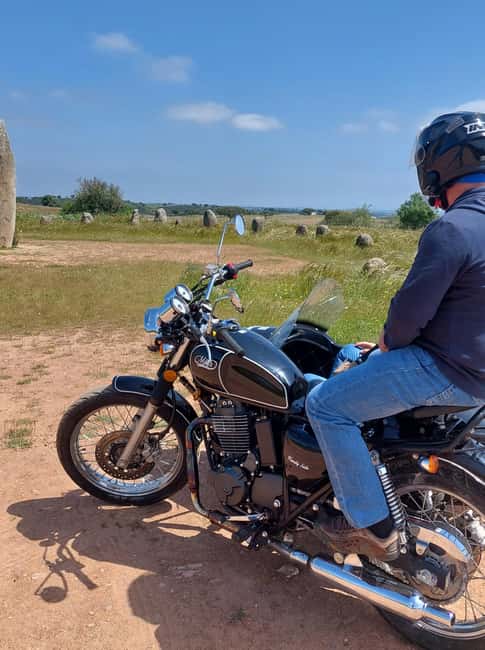
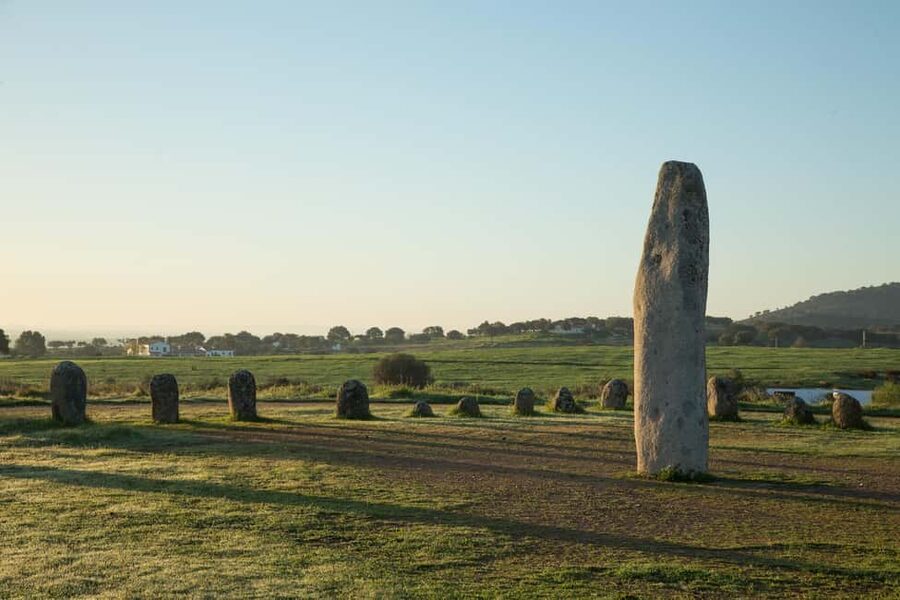
The first major stop is the Cromlech of Almendres, one of the defining prehistoric sites in the Évora area. A cromlech is a group of standing stones arranged in a ceremonial pattern. Here, the stones give you a direct sense of how far back human activity in the region reaches.
You will also visit the Menhir dos Almendres. A menhir is a single upright stone, and its scale and simplicity contrast with the grouped stones of the cromlech. Seeing both in one outing helps you understand that the megalithic remains are not isolated curiosities. They form part of a wider prehistoric tradition in the Évora district.
This is where the sidecar format earns its place. The monuments are outside the urban center, so a normal walking tour could not include them without a separate transfer. You can see an important part of the county and still return to Évora’s old center during the same three-hour experience.
Expect the guide to stop and explain rather than rush past for a quick photograph. Paulo’s narration is delivered through the helmet system while you ride, then continues at the sites. The combination gives you context before arrival and a closer explanation once you are standing near the stones.
The site is also a good test of whether this tour suits you. If you want a long archaeological visit with extensive time for independent study, three hours may feel short. If you want a strong introduction to the monuments, followed by an efficient survey of Évora, the format works better.
Évora from the Eborones to the Roman era
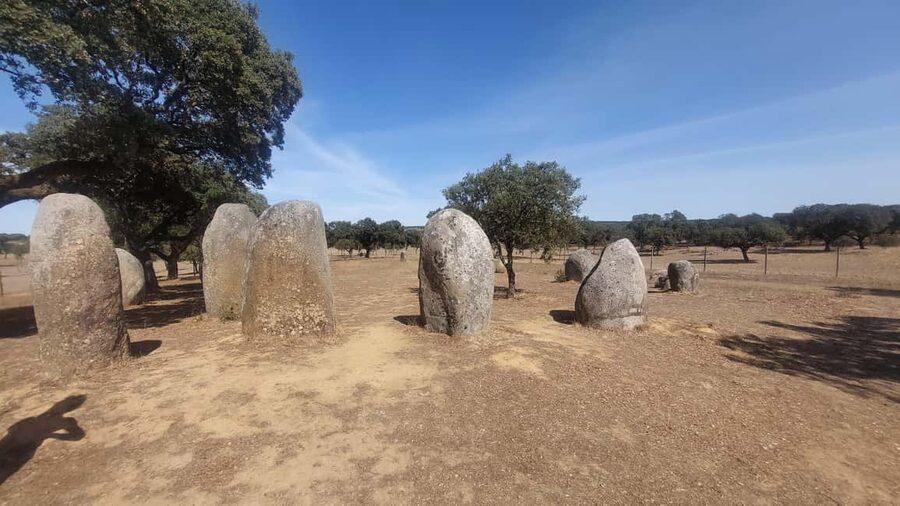
The city portion begins with the earliest settlers associated with Évora, the Eborones, at Alto de São João. This starting point places the city’s story before the better-known Roman remains and reminds you that Évora was not created in a single historical period.
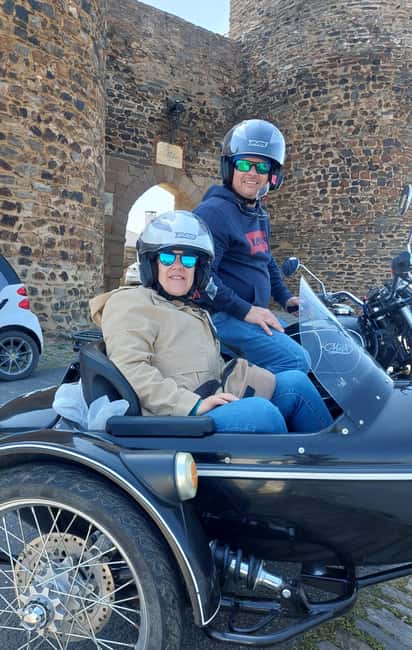
From there, the explanation moves through Roman, Visigothic, and Muslim times. Évora’s identity is layered, and the value of a good guide is knowing how those periods connect. You are not just looking at old walls or streets. You are hearing how different communities shaped the city before Portugal’s royal age brought another major change.
The exact balance between riding, stopping, and walking can vary with the route and conditions. Still, the stated plan gives Évora a central role, not merely a quick drive through town. You should expect a guided overview rather than a full museum-style examination of every monument.
The headset matters here. Évora’s streets can be active, and a moving vehicle is not the easiest place to hear a quiet explanation. Paulo’s microphone lets you follow the story while looking at the city around you. That is especially useful if you prefer to keep moving instead of stopping for a long lecture at every point.
Same roads, a different ride:
- Highlights of Porto on a glamorous sidecar – Half Day
★ 5.0 · 108 reviews - Vespa Primavera 24 Hour Rental in Madeira
★ 5.0 · 65 reviews - Madeira Island: 3-Hour Old Road Tour by Sidecar
★ 5.0 · 60 reviews - Half-Day Private Sidecar Tour on Madeira’s West Coast
★ 5.0 · 41 reviews
Portugal’s Golden Age in Évora
The later part of Évora’s story reaches the 15th and 16th centuries, when the city became a favored residence of the kings of Portugal’s Avis dynasty. This period explains much of the city’s visual power. Royal attention brought money, prestige, religious foundations, and ambitious building projects.
The tour connects that period with Cardinal-Infante Dom Henrique, later King Henry I, who acted as a major patron in Évora. The city’s cultural life also included figures such as the playwright Gil Vicente, sculptor Nicolau Chanterene, and painter Fray Carlos.
These names are useful because they put faces and professions to the city’s Golden Age. You begin to see Évora not only as a preserved old town, but as a place where royal politics, art, religion, and scholarship met.
The medieval and Renaissance material is likely to appeal most if you enjoy a broad historical story. You will not get the same depth as a specialist art-history tour, but you will gain a clear framework for understanding why Évora’s architecture looks so varied and why the city earned World Heritage status.
The tour also presents Évora alongside Templar and medieval themes, including the history of Monsaraz. Since the confirmed route details focus on Almendres and Évora, ask Paulo at the start how much time is available for Monsaraz-related material. The three-hour duration means the outing cannot offer unlimited time at every place named in the description.
The Alentejo scenery between the stops
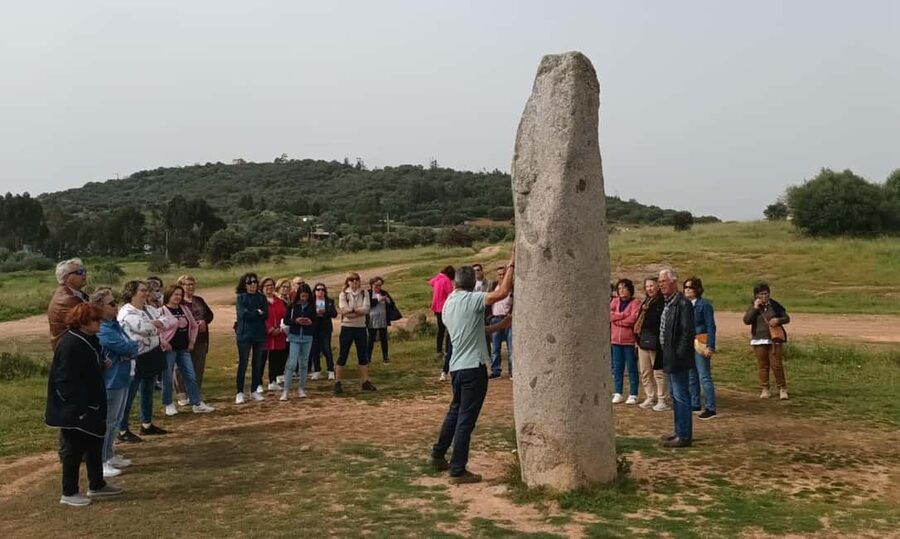
One of the nicest parts of the outing happens between the formal points of interest. You travel past cork trees and open Alentejo scenery, with the motorbike giving you a close, outdoor view that a sealed car window would reduce.
The route makes the region feel connected. Prehistoric stones, a medieval city, royal buildings, and rural traditions are not separate holiday snapshots. They belong to the same county, and the sidecar helps you see the distance and setting between them.
Weather will affect your enjoyment. Bring clothing suited to the forecast, and do not treat this as an indoor sightseeing activity. Sun, wind, or cooler air can change how comfortable you feel in the sidecar.
Photography is another practical strength. Paulo takes pictures at several points, so you do not have to keep asking strangers to capture the ride. This is particularly helpful because the sidecar itself is part of the memory, and it is difficult to photograph yourself in motion from the passenger seat.
What the $47 price really covers
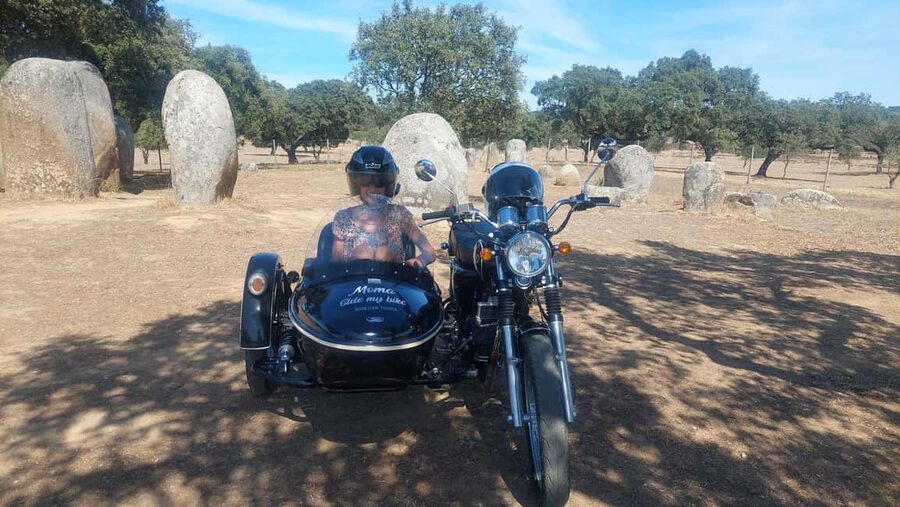
At $47 per person, the tour offers reasonable value if you want several experiences combined: transport to the megalithic sites, a private guide, a sidecar ride, live historical commentary, and a guided look at Évora. You are paying for a compact, specialized outing rather than a simple vehicle transfer.
The price also saves you from arranging separate transport to Almendres. If you were already planning to hire a car or taxi for the stones, the sidecar adds the guide and the Évora portion without splitting your day between different bookings.
Lunch is not included. That is easy to manage in Évora, but remember that the three-hour tour is not a meal excursion. If you want to eat before or after, allow time outside the scheduled ride.
The value is less clear for someone who wants only a conventional walking tour of central Évora. You may prefer to spend three hours inside the old center, moving slowly between monuments and museums. This experience makes the most sense when the vehicle, countryside, and prehistoric stops are part of the appeal.
Comfort, equipment, and who should book
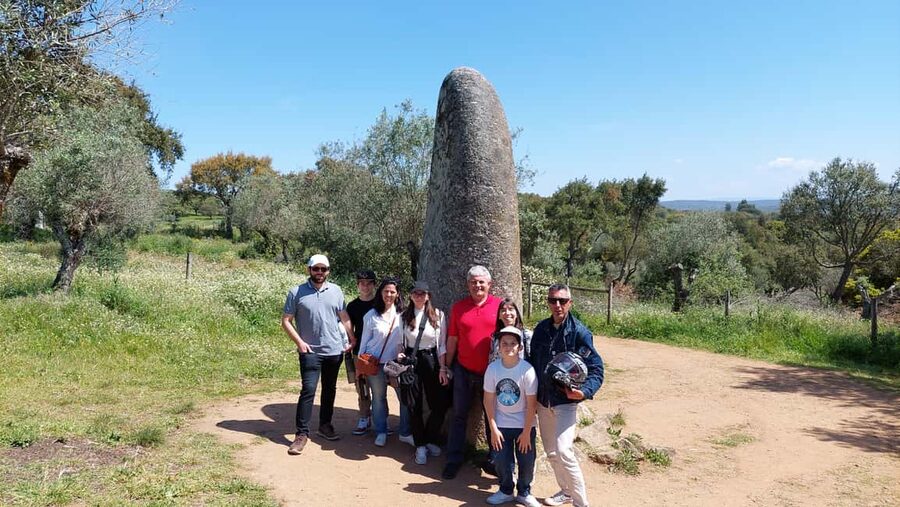
The sidecar is best for adults and older children who can sit comfortably in an exposed vehicle. Children under six are not suitable for the activity. The operator asks you to wear weather-appropriate clothing, and alcohol and drugs are not allowed.
Height and back comfort deserve attention. One passenger specifically found the vehicle unsuitable for a tall person or someone with back problems. That does not make the ride uncomfortable for everyone, but it is a real consideration, especially because the tour lasts three hours.
The helmet communication system is a strong feature when it works properly. You can speak with Paulo during the ride and follow the commentary without waiting for the next stop. There have been occasional headset connection issues, but Paulo has dealt with them rather than allowing the problem to spoil the outing.
I would choose this for a couple, friends, or a small private group looking for something unusual and easy to remember. It also suits anyone who wants historical background but does not want to spend the entire day inside formal monuments.
I would think twice if you dislike motorcycles, need generous legroom, have back trouble, or want long, quiet stretches at each archaeological site. The ride is the point, and the vehicle’s limitations come with it.
Language, timing, and flexibility
The guide can conduct the experience in English, Spanish, or Portuguese. That makes it useful for mixed-language groups, though you should select or confirm your preferred language when booking.
The scheduled duration is three hours, with departure times depending on availability. Because the tour combines sites outside Évora with the city itself, punctuality matters. Arriving at the Public Garden’s main entrance a little early gives you time to locate the kiosk, bandstand, Vasco da Gama statue, and palace.
The booking terms are flexible. You can reserve and pay later, and cancellation is free up to 24 hours before departure for a full refund. These options help if your Évora plans depend on weather, though the ride itself remains most enjoyable in suitable outdoor conditions.
Should you book the Évora sidecar tour?
Book it if you want to connect Almendres’ prehistoric stones, Évora’s long urban story, and the Alentejo countryside in one compact outing. Paulo’s historical narration, helmet communication system, and photographs add more substance than a simple scenic ride.
Skip it if you need a spacious seat, have back problems, or want a slow, museum-focused day. For most people who like unusual transport and a strong sense of place, $47 is a fair price for a private three-hour introduction to Évora beyond its main square.
FAQ
Where does the tour start?
It starts at the main entrance of Évora’s Public Garden. Look for the nearby kiosk, bandstand, large Vasco da Gama statue, and palace.
Where does the tour finish?
The tour returns to the Jardim Público de Évora.
How long does the experience last?
The tour lasts three hours.
What places are included?
The route includes the Cromlech of Almendres, the Menhir dos Almendres, and a guided tour of Évora. The activity also presents Templar and medieval themes connected with Monsaraz.
Is lunch included?
No. Lunch is not included in the price.
What languages are available?
The live guide can conduct the tour in English, Spanish, or Portuguese.
Is this a private tour?
Yes. The experience is arranged for a private group.
Who is the guide?
Paulo is the named guide associated with the experience. He drives the sidecar, explains Évora’s history, communicates through the helmet headset, and takes photographs during the outing.
Are young children allowed?
Children under six are not suitable for this activity.
What should I bring?
Bring clothing suited to the weather. The ride takes place outdoors, so conditions can affect your comfort.
Can I cancel the booking?
You can cancel up to 24 hours in advance for a full refund. You can also reserve now and pay later.
Just added around Portugal
- Private Tour of Piaggio Ape Calesino★ 5.0 · 2 reviews
- Lisbon – Private Vintage Sidecar Tour to Sesimbra’s Coast★ 5.0 · 13 reviews
- Private Sidecar Sunset & Drinks!★ 5.0 · 16 reviews
- Lisbon by Fiat 500 Jolly convertible!!★ 5.0 · 4 reviews
- Lisbon: Private Experience Motorcycle Sidecar Tour★ 5.0 · 14 reviews
- Private Vespa West Tour-Seixal,São Vicente,Porto Moniz(4hr)★ 5.0 · 4 reviews
- Private Vespa Tour Nun´s Valley,Câmara Lobos,CaboGirão(4hrs)★ 5.0 · 6 reviews
- Porto Private Sidecar Tour★ 5.0 · 18 reviews
Portugal Vespa Tours, compared.
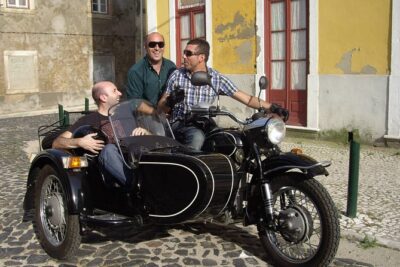
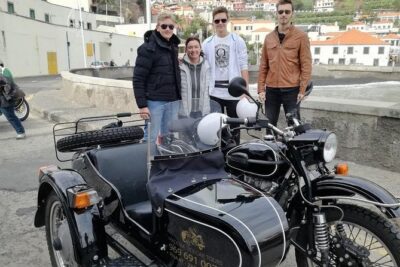
Madeira Sidecar Adventure – Old West Road (1 or 2 Persons)
Read our review →
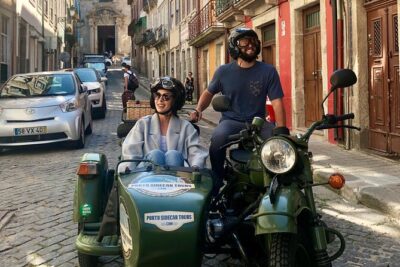
Highlights of Porto on a glamorous sidecar – Half Day
Read our review →
Browse the lists this tour appears in