
REVIEW · ROME
Exploring Rome on a Vintage Vespa Adventure Journey
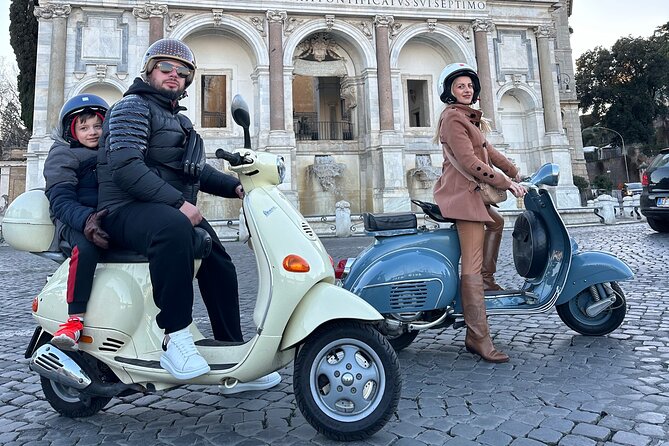
Rome is at its most entertaining from the seat of a classic Vespa. The scooter slips through narrow lanes and connects grand piazzas, ancient ruins, hilltop views, and neighborhood streets far faster than a walking tour. Guide Erion brings a personal touch, pointing out favorite corners and sharing stories as you move through the city.
I like the way this route mixes famous sights with less expected stops, especially the Janiculum viewpoint, Piramide Cestia, and Trastevere. I also like that the tour is private, so your group gets the guide’s attention instead of following a large pack through traffic.
The main consideration is timing. The experience lasts about three hours, yet the listed stops add up to a very full route. Expect a fast-moving overview with short visits, not long time inside monuments. The tour requires good weather, and you will need to be comfortable riding through Rome’s busy streets.
Key points to know before booking
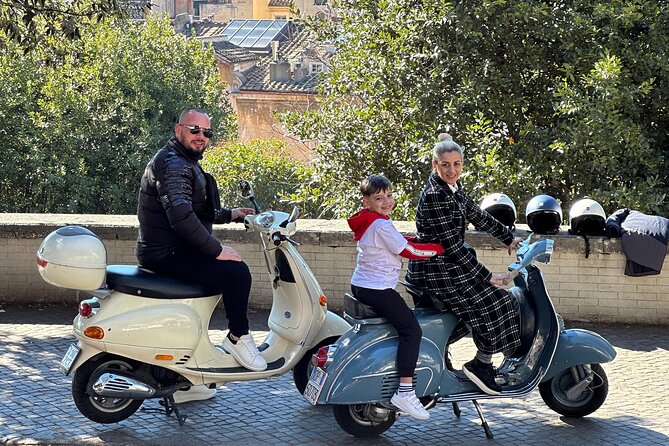
- Classic Vespa sightseeing: Use a scooter to move between Rome’s major monuments and narrow historic streets.
- A private experience: Only your group participates, which allows for a more personal pace and direct conversation with the guide.
- Erion’s local route: The guide is praised for adding hidden corners, alleyways, viewpoints, and stories beyond the standard postcard stops.
- Major sights without entry queues: See the Pantheon, Trevi Fountain, Colosseum, St. Peter’s Square, and more from the outside.
- Three live language choices: Guidance is offered in English, Spanish, or Italian.
- Snacks included: Soda and a snack are part of the tour; dinner is not included.
Why a Vespa works so well in central Rome
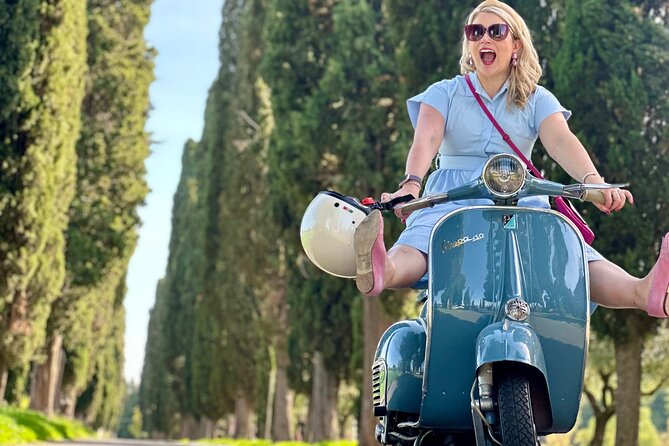
Rome is not hard to recognize, but it can be hard to cover. The Pantheon, Spanish Steps, Colosseum, Vatican, and Trastevere are spread across a city where streets bend, lanes narrow, and traffic can slow a car to a crawl.
A Vespa changes the rhythm. You can move between districts without spending the whole afternoon walking from one sight to the next. The ride also puts you close to the city’s details: old façades, small piazzas, church fronts, and side streets that are easy to miss from a larger vehicle.
This is not a museum tour. You will not spend an hour inside one ancient building. Instead, the route gives you a broad look at Rome, with time to stop, hear a story, take in a view, and continue.
That format works especially well early in a Rome visit. You can get your bearings and mark places you may want to return to on foot. It also suits repeat visitors. The major squares may be familiar, but Erion’s route includes less obvious corners and offbeat stops, including the tombs of San Callisto according to one tour experience.
More Vespa Tours in Rome:
- Vespa Sidecar Tour By Night with Pickup
★ 5.0 · 1,803 reviews - Rome Morning Vespa Sidecar Tour in Rome with Cappuccino
★ 5.0 · 1,771 reviews - Rome: Explore the City by Vespa with an Optional Photoshoot
★ 5.0 · 1,103 reviews
Starting at Piazza di Pasquino
The meeting point is Piazza di Pasquino, 1, in the historic center. This is a useful starting place because the route begins among Rome’s old lanes rather than at a distant transport hub.
The tour is offered with a mobile ticket, and confirmation is sent within 48 hours of booking, subject to availability. Since the activity ends back at the same meeting point, you do not need to plan a separate return trip.
The tour is private, so the feel should be more focused than a large group excursion. That matters on a Vespa route. You can ask about a statue, church, street, or neighborhood as it comes into view, rather than waiting for a guide to address a crowd.
Pantheon and Piazza Navona: Rome’s grand urban rooms
The Pantheon is the first listed stop, with about 20 minutes. Built as a Roman temple and completed in AD 126, it is famous for its huge dome and central oculus, which lets daylight fall into the interior.
The stop is listed as free admission, but this tour does not include a ticket inside. Treat the visit as an exterior introduction and a chance to hear the guide explain what makes the building so remarkable. If entering the Pantheon is important to you, plan a separate visit.
From there, the route reaches Piazza Navona for about 20 minutes. The long oval shape follows the footprint of the Stadium of Domitian, built in AD 85 for public spectacles. The square now feels more like a grand open-air salon than a stadium, but its unusual form still reveals the ancient structure beneath the modern city.
Piazza Navona is one of the places where a guide adds real value. A quick explanation helps you read the shape of the square, understand its Roman origins, and connect the surrounding churches and fountains to the larger story of Rome.
Trevi Fountain and Campo de’ Fiori
The Trevi Fountain receives about 15 minutes. Designed by Nicola Salvi and completed by Giuseppe Pannini in 1762, it rises 26.3 meters high and spans more than 49 meters across. It is one of Rome’s most famous sights, so expect a busy setting and a short stop rather than a quiet private moment.
The Vespa is useful here because the fountain sits in a dense part of the city where a large vehicle would be awkward. Still, the scooter does not remove the crowds around the monument. You will want to keep the stop focused: admire the Baroque design, listen to the guide, and take a few photos before moving on.
Campo de’ Fiori gets about 15 minutes. Its market stalls sell flowers, fruit, meat, and fish, giving the square a more everyday feel than the monumental spaces earlier in the route. It is also a place with a darker past. Giordano Bruno was burned here in 1600 after being accused of heresy, and his statue now marks that history.
I like this contrast. Rome is not only marble, emperors, and grand churches. Campo de’ Fiori adds ordinary market life and a reminder that public squares could serve as places of punishment as well as commerce.
Market activity can vary by time and day, so do not book this tour solely for a particular stall or product. The value is the setting, the story, and the quick look at how the square fits into modern Rome.
Same roads, a different ride:
- Rome Vespa Scooter Tour with Professional Photographer
★ 5.0 · 857 reviews - Rome: Highlights Vespa Sidecar Tour with Coffee and Gelato
★ 4.9 · 747 reviews - Rome: Vespa Ride with Pictures and Sweet Tastings
★ 5.0 · 723 reviews - Rome Afternoon Sightseeing Vespa Sidecar Tour with Gourmet Gelato
★ 5.0 · 692 reviews
Piazza di Spagna and Piazza del Popolo
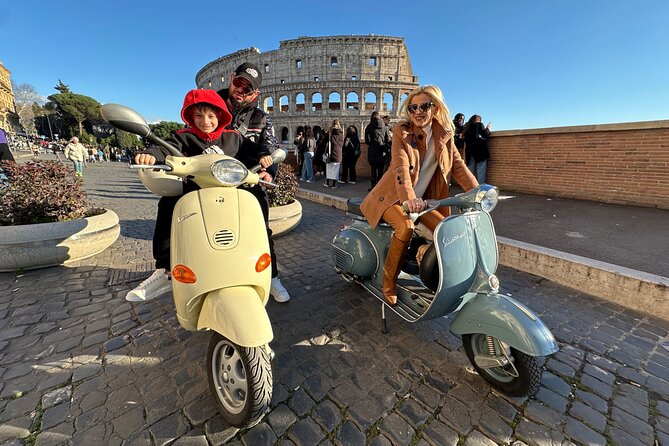
At Piazza di Spagna, the tour allows about 15 minutes. The Spanish Steps rise from Piazza di Spagna toward Trinità dei Monti, linking the lower square with the church above. The staircase has 135 steps and is one of Rome’s most recognizable urban scenes.
The short stop is enough to see the layout and hear the background, but not enough for an unhurried climb, a long rest, or an extended visit inside the church. Also keep in mind that the tour route continues by Vespa, so this is a sightseeing pause rather than a full walking visit.
Piazza del Popolo receives about 10 minutes. Its name means People’s Square in modern Italian, though its older connection is to poplar trees and the nearby church of Santa Maria del Popolo. The broad space feels different from the tight lanes around Trevi and the Pantheon.
These two stops show why the route is useful for a first look at Rome. You can compare a famous staircase, a large ceremonial square, a Baroque fountain, and an ancient temple without spending the entire day navigating between them yourself.
Piramide Cestia and the long view of Rome’s past
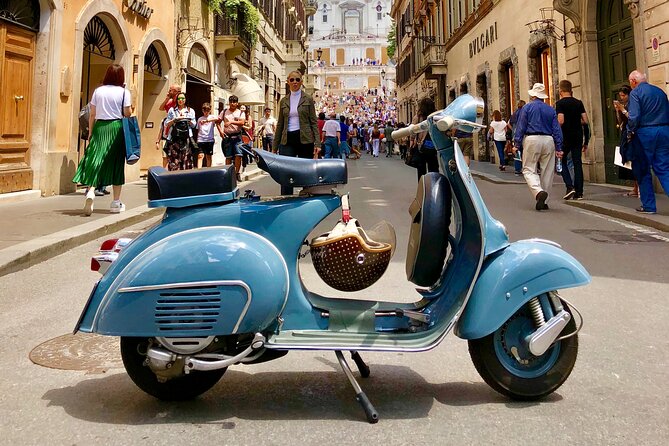
Piramide Cestia is one of the route’s more unusual stops, with about 15 minutes. The pyramid was built as a tomb for Gaius Cestius, a member of the Epulones religious corporation, and later became part of Rome’s fortifications.
Its Egyptian-inspired form can seem surprising at first. Rome is full of reminders that the ancient city absorbed outside influences, fashions, and religious ideas. The pyramid is also near Porta San Paolo and the Protestant Cemetery, giving this part of the route a different character from the central piazzas.
This is a good example of the tour’s advantage over a standard monument checklist. You still see the big names, but you also get a stop that many short city tours skip. The visit is brief, so the guide’s explanation matters more than a long period of independent exploration.
Piazza Venezia and the Monument to Victor Emmanuel II
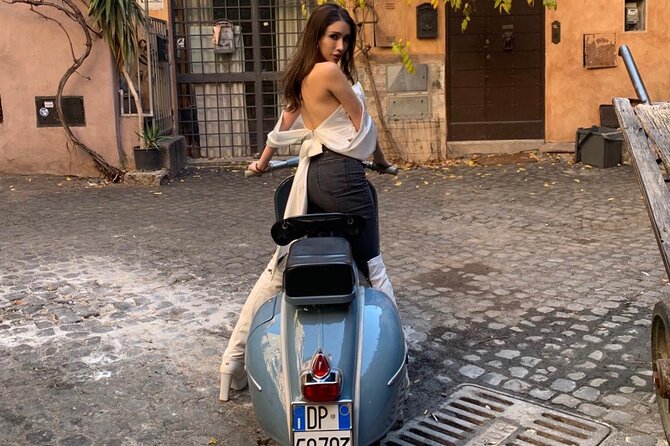
Piazza Venezia is another quick look at Rome’s monumental center. The square was reshaped in the 19th and early 20th centuries for the Monument to Victor Emmanuel II, also called the Altare della Patria.
The huge white structure rises through stairways, terraces, sculpture, and a colonnaded upper section topped by bronze chariots. The Unknown Soldier was buried in its crypt in 1921.
You may know it by its local nicknames, including the typewriter or wedding cake, though the official symbolism is more serious. The monument celebrates Italian unity and freedom, and its broad steps give you a strong view of how modern national identity was placed beside ancient Rome.
The route does not include entry to the monument. This is an exterior stop, useful for orientation and photographs. If you want museums or the crypt, you will need to return on your own.
Circus Maximus and the Janiculum viewpoint
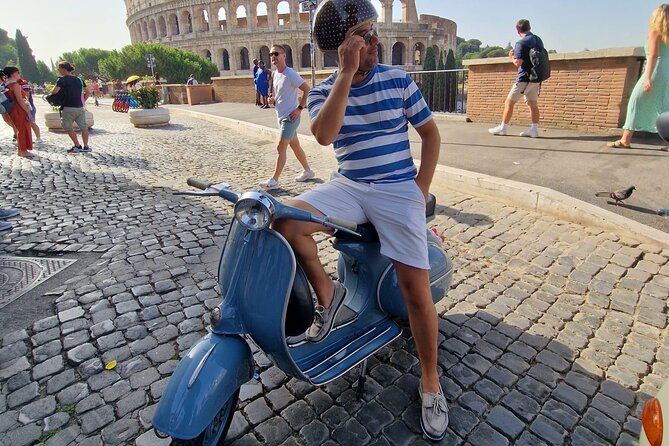
Circus Maximus gets about 10 minutes. The ancient stadium once measured roughly 621 meters long and 118 meters wide, with room for more than 150,000 spectators. It hosted chariot races and other mass entertainments between the Aventine and Palatine hills.
Today, the site is a public park used for events and festivals. Its open scale can be difficult to picture from ground level, which is why a guide’s explanation helps. You are looking at a broad valley that once held one of the ancient world’s biggest public venues.
The Janiculum, or Gianicolo, receives about 20 minutes and is likely one of the best photo stops on the route. The hill is west of the Tiber and is not one of the traditional Seven Hills of ancient Rome, but it gives a broad view over the modern city.
The hill also has the Fontana dell’Acqua Paola, a Baroque fountain built under Pope Paul V in the late 17th century. Here, the tour shifts from close-up monuments to Rome seen from above. I especially like this part for repeat visitors who have already covered the central ruins and want a wider sense of the city.
Trastevere by narrow cobbled streets
Trastevere is included as a neighborhood passage rather than a timed formal stop. Its name and identity are tied to the area across the Tiber, which in Rome’s Regal period belonged to the Etruscans. The old quarter still has narrow cobbled streets and ancient houses.
This is where the Vespa format makes practical sense. The lanes are part of the experience, not just roads between sights. You may see a side of Rome that feels more residential and local than the major piazzas, though the area is also lined with pubs and restaurants at night.
The route gives you a brief introduction, not a full food tour or evening in Trastevere. If you want to eat here, the activity ends back at Piazza di Pasquino, and dinner is not included. It is better to treat Trastevere as a neighborhood preview and return later if it appeals to you.
St. Peter’s Square and the Colosseum
At St. Peter’s Square, the tour allows about 15 minutes. The square sits in front of St. Peter’s Basilica in Vatican City and is framed by Gian Lorenzo Bernini’s massive Doric colonnades. The central obelisk came from Egypt and was placed here in 1586.
The stop focuses on the square and basilica exterior. No Vatican or basilica admission is included, so you will not have time for the interior visit during this Vespa ride. That is not a flaw, but you should know what you are buying: a city overview, not a Vatican entry tour.
The final major stop is the Colosseum, with about 20 minutes. Construction began under Vespasian in AD 72 and was completed under Titus in AD 80. Later changes came under Domitian, giving the amphitheater its connection with the Flavian dynasty.
The Colosseum is one of those sights that deserves its own visit. A 20-minute exterior stop gives you the scale and setting, but not the underground areas, seating levels, or interior exhibits. Still, ending here makes sense. You finish with one of Rome’s strongest ancient landmarks and a clear idea of where to return for a longer exploration.
What the $177.44 price includes
At $177.44 per person, this is not the cheapest way to see Rome. You are paying for a private three-hour route, a classic Vespa experience, a licensed guide, live commentary, and the ability to cover many parts of the city in one outing.
The value improves if you are short on time, traveling with a small private group, or want help finding less obvious streets and viewpoints. It is also a good fit if walking long distances in Rome sounds tiring but you still want to see a wide spread of sights.
The price is harder to justify if your main goal is entering monuments. No admission tickets are included, and the Pantheon, Vatican, and Colosseum are all exterior visits on this route. You will also need to arrange dinner separately, although a snack and soda are included.
Live guidance is available in English, Spanish, or Italian. That choice matters because the value comes largely from the guide’s stories and explanations, not just the ride itself.
Who should book this Vespa tour?
I would look closely at this experience if you are visiting Rome for the first time and want a quick orientation with personality. It is also well suited to repeat visitors, especially those who have already seen the main piazzas and want new corners such as Piramide Cestia, Trastevere lanes, hilltop views, or the tombs of San Callisto.
The private format suits friends, couples, and families who prefer direct attention. Most people can participate, and the meeting point is near public transportation.
I would choose a walking tour instead if you want long museum visits, detailed archaeological study, or a slow look at each square. I would also think carefully about the ride if you dislike traffic, feel uneasy on scooters, or need a weather-proof plan. The activity depends on good weather, and poor conditions can lead to a new date or a full refund.
Free cancellation is available up to 24 hours before the start time. Changes or cancellations made later are not refunded, so watch the local cut-off time.
Final verdict: a fast, personal look at Rome
Book this tour if you want to cover a lot of Rome in about three hours, enjoy the freedom of a Vespa, and value a guide who adds local stories and less obvious stops. Erion’s personal route, the private format, and the mix of famous monuments with places such as Piramide Cestia and Gianicolo give the experience more character than a simple drive-by sightseeing loop.
Skip it if you want extensive time inside the Pantheon, Colosseum, Vatican, or other monuments. For the right visitor, this is a lively orientation and a memorable way to connect Rome’s grand center with its quieter corners. Just keep your expectations clear: it is a guided city ride with short stops, not a full archaeological tour.
FAQ
How long does the Vespa tour last?
The tour lasts approximately three hours.
Where does the tour start and finish?
It starts at Piazza di Pasquino, 1, 00186 Rome, and ends back at the same meeting point.
Which languages are available?
Live guidance is offered in English, Spanish, or Italian.
Is this a private tour?
Yes. Only your group participates in the activity.
Are attraction admission tickets included?
No. The listed stops have no admission charge as part of the tour, but the activity does not include entry tickets to monuments or museums.
What is included in the price?
The price includes a licensed guide, in-person guidance, snacks, and soda.
What happens if the weather is poor?
The experience requires good weather. If it is canceled because of poor weather, you will be offered a different date or a full refund.
Just added around Rome
- Vespa tour with Professional Photoshoot★ 4.8 · 22 reviews
- Vespa Tour with Professional Photographer★ 4.9 · 9 reviews
- Rome: Vespa Tour with Gelato and Photos★ 4.9 · 7 reviews
- Vespa Sidecar Tour: Highlights of Rome★ 4.7 · 10 reviews
- Food tour & Vespa tour & Photo tour! All included★ 5.0 · 2 reviews
- Vespa Tour – Explore Ancient Rome★ 5.0 · 5 reviews
- Vespa Sidecar Tour : Rome by Night★ 4.1 · 7 reviews
- Vespa Scooter Tour “Rome as a Local”★ 5.0 · 12 reviews
Rome Vespa Tours, compared.
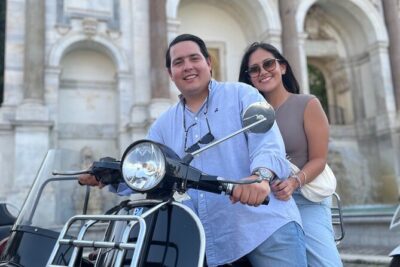

Rome Morning Vespa Sidecar Tour in Rome with Cappuccino
Read our review →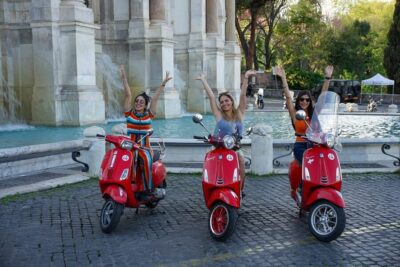
Explore the City by Vespa with an Optional Photoshoot
Read our review →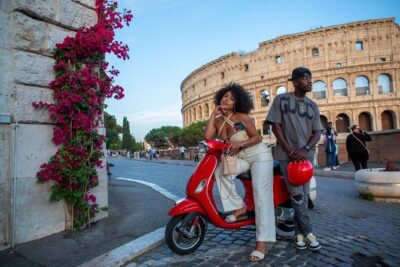
Rome Vespa Scooter Tour with Professional Photographer
Read our review →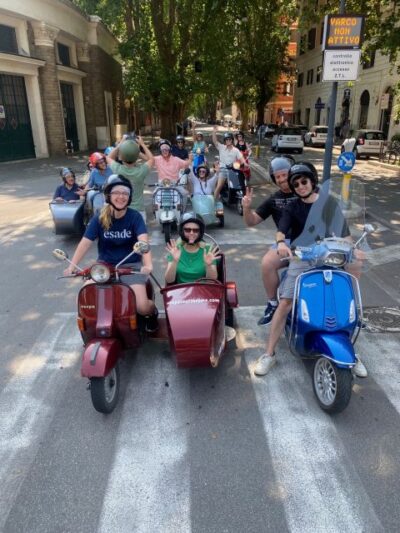
Highlights Vespa Sidecar Tour with Coffee and Gelato
Read our review →
Rome Afternoon Sightseeing Vespa Sidecar Tour with Gourmet Gelato
Read our review →
Browse the lists this tour appears in