
REVIEW · ROME
Rome Vespa Tour with Gelato Stop
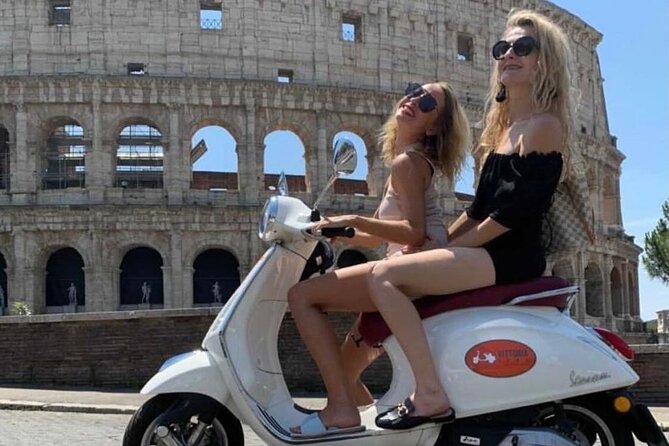
Rome is made for a moving tour, and this one puts you on a Vespa instead of behind a bus window. In three to four hours, you can reach hilltop views, ancient ruins, grand piazzas, and famous fountains without spending the day on foot. The private format means your guide can shape the pace and explain what you are seeing.
I like the personal attention and the chance to ride your own scooter, rather than simply sit behind a driver. I also like the route’s mix of big sights and city views, especially the Pincio and Gianicolo terraces. The main catch is simple: you need excellent scooter skills, and Rome traffic is not the place to learn.
Key things to know before you book
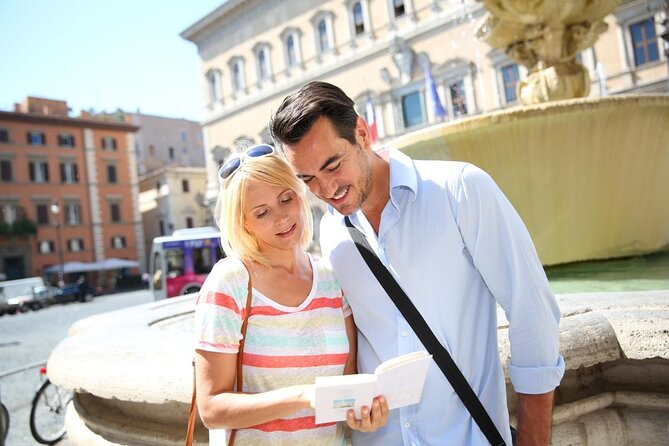
- You ride your own Vespa: A helmet is included, but the tour requires strong scooter-driving experience.
- The route covers classic Rome: Expect St. Peter’s Basilica, Circus Maximus, Piazza Venezia, the Pantheon, Trevi Fountain, Piazza Farnese, and Campo de’ Fiori.
- Private means flexible attention: Only your group takes part, so the guide can focus on your interests.
- The views are a major part of the tour: Pincio and Gianicolo provide wide city panoramas and good photo stops.
- You get more ground covered with less walking: This is useful if you want a broad first look at Rome.
- The tour includes a gelato stop: It gives the sightseeing a pleasant Roman break.
Why a Vespa works so well in Rome
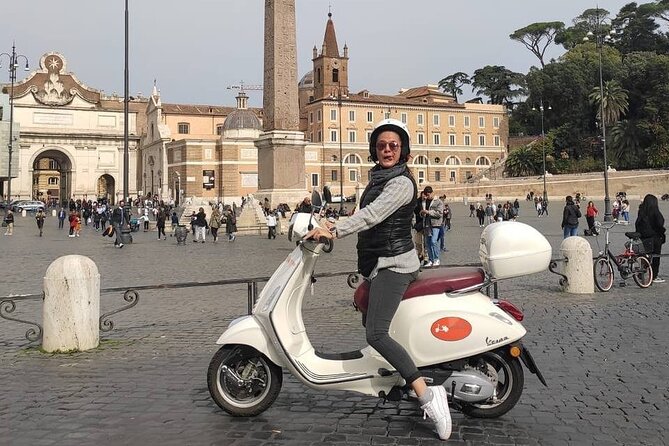
Rome can be tiring on foot. The major sights are spread across hills, piazzas, river crossings, and busy central streets. A scooter lets you connect them in one outing, so you spend more time seeing Rome and less time checking maps or waiting for transport.
The appeal is not only speed. From a Vespa, you experience Rome at street level. You pass from a grand avenue into a small square, then climb toward a terrace with a wide view. You get the changing feel of the city instead of seeing only the area around one monument.
This is a private experience, which matters here. A large group can make a scooter tour feel rigid, especially when the road is busy or someone needs more time at a photo stop. With only your own group participating, you can ask questions, pause for pictures, and give your guide a clearer idea of what interests you.
The English option keeps the tour easy for English-speaking visitors. Matteo is named as a guide who has offered clear historical information and included places suited to the group’s interests. Stefano also handles communication for the operator, so you may encounter either name during the booking process or tour arrangements.
More Vespa Food Tours in Italy
- Rome: Highlights Vespa Sidecar Tour with Coffee and Gelato
★ 4.9 · 747 reviews - Rome Afternoon Sightseeing Vespa Sidecar Tour with Gourmet Gelato
★ 5.0 · 692 reviews - Vespa Sidecar Tour In Rome with Pickup, Drop-off, Gelato included
★ 5.0 · 472 reviews
Starting at Via Marche
The listed start point is Vittoria Rent Noleggio Scooter at Via Marche 15, near central Rome. The tour information also says pickup is offered at your hotel reception, so confirm the exact pickup arrangement when you book. That small check can save time, since the starting point and hotel pickup details are presented separately.
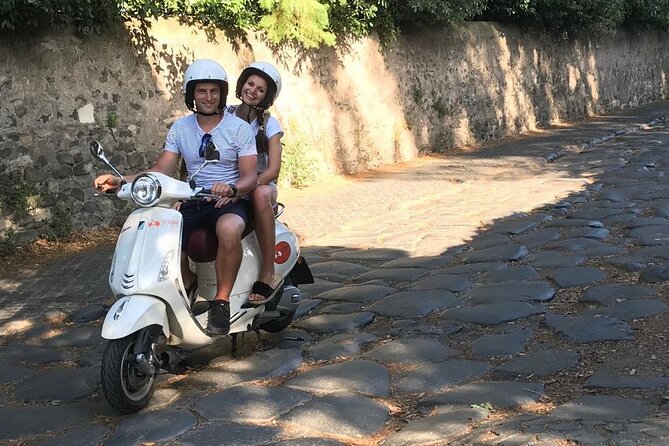
At the rental point, you begin with the scooter and helmet. The tour description makes clear that this is a self-driving outing, not a ride where you sit behind a professional driver. You should arrive ready to show confident control of a scooter and to manage Roman streets for several hours.
The physical demand is listed as moderate. That does not mean the riding is suitable for everyone. You still need to handle the scooter, stay alert, and remain comfortable in traffic. If your scooter experience is limited to a quiet beach resort, this may not be the right activity for you.
Trinita dei Monti and the Pincio view
The first scenic stop is Trinita dei Monti, where you pause for a view over Rome. The stop lasts about ten minutes, enough for photographs and a quick orientation.
You then continue to Terrazza del Pincio for another panoramic look. This is one of the best ways to begin the tour because it shows you how Rome fits together. Instead of seeing each landmark as an isolated stop, you get a sense of the city’s domes, rooftops, and broad avenues.
These early stops also give you a chance to settle into the rhythm of the Vespa. The route is not just a list of monuments. It combines short rides with brief pauses, which helps keep a three to four-hour outing from feeling like one long stretch in the saddle.
The drawback is that ten minutes goes quickly. If photography is your main goal, you may want to keep your camera ready and avoid spending the whole stop walking around.
St. Peter’s Basilica from the road
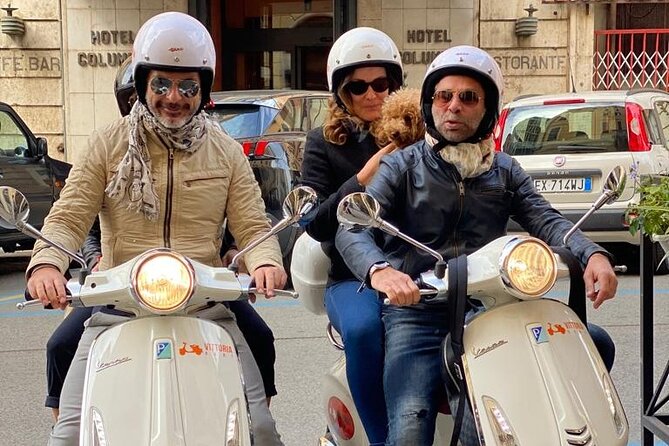
The route includes a stop near St. Peter’s Basilica for a photograph. The planned stop is about fifteen minutes, and admission is not part of the activity.
That distinction matters. You are seeing and photographing the basilica from the outside, not taking a guided visit inside. If you want to explore the interior, the dome, or the Vatican Museums, plan a separate visit on another day.
Still, St. Peter’s works well in this format. The basilica is one of Rome’s most recognizable sights, and a short stop gives you the essential view without using a large part of the tour. Your guide can also place it within the wider route, connecting the Vatican area with the hills and central squares you visit later.
More Vespa Food Tours in Rome
- Rome: Guided City Food Tour by Vespa and Tastings
★ 4.9 · 195 reviews - Rome: Vespa Sidecar Tour with Hotel Transfers & Gelato
★ 5.0 · 86 reviews - Rome: Vespa Self-Drive Tour with Gelato
★ 4.8 · 22 reviews - Afternoon Vespa Sidecar Tour with Gourmet Gelato Stop
★ 4.9 · 18 reviews
Gianicolo and Rome’s noon cannon
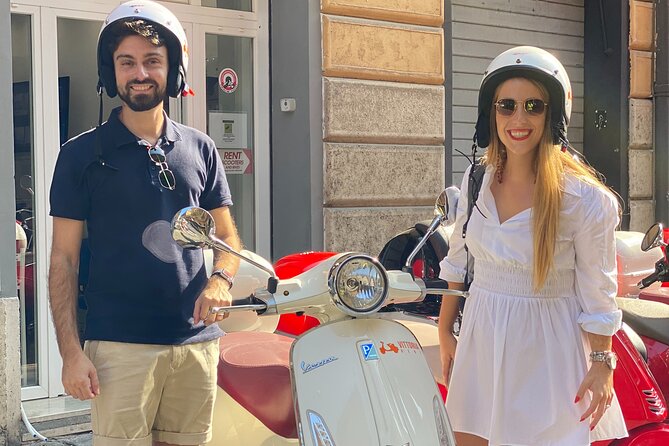
The next major viewpoint is Terrazza del Gianicolo, where the stop lasts about twenty minutes. The plan includes waiting for the cannon shot at noon, adding a distinct bit of local ceremony to the route.
Timing matters here. The cannon shot is tied to noon, so ask when your tour is scheduled and how closely the route follows that timing. If your ride does not pass the Gianicolo at the right hour, you should not expect this part to happen exactly as described.
The terrace is also valuable even without the cannon. It gives you another broad view of Rome and provides a natural pause after the earlier sightseeing. The route uses the city’s high points well, giving you several chances to look out over Rome instead of staying at street level the entire time.
Circus Maximus and the ancient city
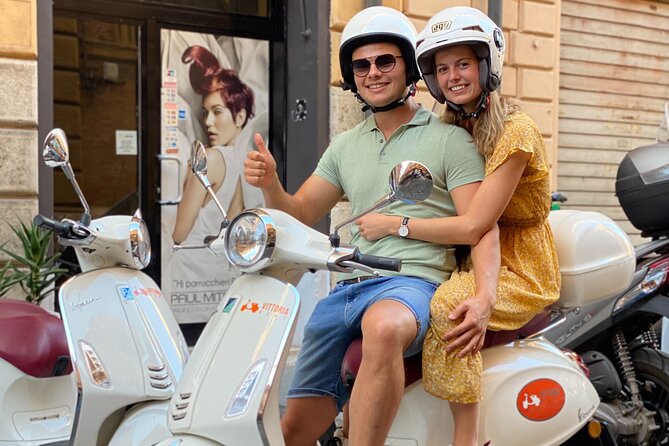
At Circus Maximus, you stop for about ten minutes at the site once used for famous chariot races. The open space can be hard to understand if you only read about it in a guidebook. Seeing the area in person gives scale to the ancient venue and helps you picture how large public events once were.
This is a quick outdoor visit, not a long archaeological tour. You should expect an introduction and a view of the site rather than a detailed excavation visit. That fits the larger purpose of the Vespa ride, which is to connect many parts of Rome in one outing.
The route then moves toward Piazza Venezia and the ancient city. The square is dominated by the Altare della Patria, the imposing white monument that gives this part of Rome its unmistakable look. You have about ten minutes here, enough to see the monument and take photographs.
Piazza Venezia is often busy and visually intense. A guide is useful because the square contains several layers of Rome at once: grand national architecture, ancient remains, traffic, and routes leading toward the historic center. The stop may feel brief if you want to study every detail, but it gives you a strong first look.
The Pantheon’s huge dome
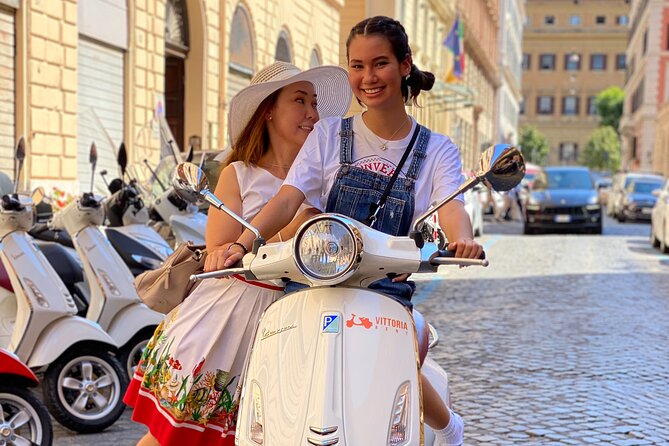
The Pantheon is another ten-minute stop. You see the enormous round dome and the classical columns of the building, originally dedicated to the Roman gods.
The Pantheon is one of the places where a short stop can still make a strong impression. Its exterior is compact enough to take in quickly, while the columns and dome create a powerful sense of scale. The tour does not list an interior admission, so treat this as an outside visit unless your guide tells you otherwise.
I like having the Pantheon included because it sits naturally within a central Rome route. You do not spend the whole tour at monuments far apart. Instead, the stops move from grand viewpoints to ancient sites and then into the dense historic center.
Trevi Fountain and the practical side of crowds
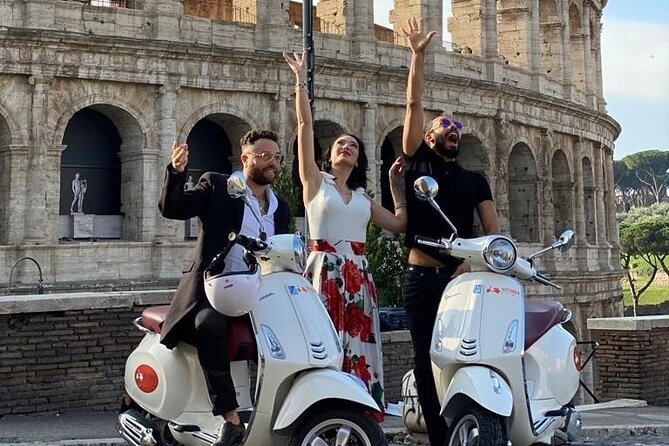
The Trevi Fountain receives about fifteen minutes. It is one of Rome’s most famous symbols, and the stop gives you time to see the fountain, take pictures, and absorb the theatrical setting.
The fountain displays water from the Acqua Vergine aqueduct, which Marcus Vipsanius Agrippa brought to Rome in 19 B.C. to supply the city’s baths. That detail makes the monument more than a decorative photo stop. It connects the scene in front of you with Rome’s ancient water system.
Expect this to be one of the busiest points on the route. The tour gives you a set amount of time, so keep your belongings secure, stay aware of your group, and do not count on a quiet personal visit. The guide can help you make the most of the stop, but no short tour can remove the crowds from Trevi.
Piazza Farnese and Campo de’ Fiori
Piazza Farnese offers a different mood. The square is associated with Palazzo Farnese, the Church of Santa Brigida, and Palazzo Fusconi Pighini. Your stop lasts about ten minutes, giving you a quick look at the surrounding buildings and the shape of the piazza.
This is the kind of pause that helps balance the famous sights. You are not only moving from one headline monument to the next. You are also seeing the grand urban spaces that make central Rome feel like a connected city.
The final listed stop is Campo de’ Fiori, another ten-minute visit. From Monday through Saturday, a food, flower, and general goods market has been held there each morning since 1869. If your tour takes place during those market hours, you may see the square in its market setting. If not, you still get to see one of Rome’s best-known public spaces.
The short timing means you should not plan to shop extensively. Think of Campo de’ Fiori as a final taste of everyday central Rome, not a dedicated market tour.
The gelato break
The gelato stop is a small feature, but it improves the shape of the experience. After several viewpoints and historic stops, you get a chance to pause and enjoy one of Italy’s classic treats.
The supplied details do not name the gelateria or specify the flavor choices, so do not book this expecting a particular shop or tasting menu. What you can expect is a casual break folded into the route, rather than a separate food-focused activity.
For many people, this will be welcome after riding and sightseeing. It also gives you a chance to ask the guide questions in a less hurried setting.
What $268.25 buys you
At $268.25 per person, this is not a budget way to see Rome. The value comes from the private format, the scooter rental, the helmet, the English-speaking guide, and the amount of ground covered in three to four hours.
If you hired a scooter separately and tried to build this route alone, you would still need to handle navigation, parking, traffic, and the order of stops. The guide removes much of that work and adds context at each location. For a couple or small group that wants a focused introduction to Rome, the price may make sense.
The value is weaker if you already know Rome well, dislike scooters, or prefer long visits inside museums and churches. This tour is about seeing many places from the outside and getting a feel for the city. It is not a substitute for a Vatican visit, a Pantheon interior visit, or a full archaeological tour.
Who should choose this ride
I would point this tour toward confident scooter riders who want a broad first look at Rome. It suits people who find long walking days difficult, families or friends who want a private outing, and visitors who enjoy moving between sights rather than spending hours in one place.
It is also a good fit if you like taking photos. The Pincio, Gianicolo, St. Peter’s, Piazza Venezia, Trevi Fountain, and the central squares all offer different types of pictures.
I would be cautious if you have little scooter experience, feel anxious in city traffic, or want deep time at each monument. The operator specifically requires excellent scooter-driving experience for the self-guided riding format. That is not a minor note. It is the key safety condition for booking.
The tour has a 4.9 rating from 14 reviews, with 100 percent of respondents recommending it. The clearest praise centers on the personal approach, useful historical information, and the chance to see Rome in a different way. Matteo is singled out for adapting the experience to the group’s interests, which is exactly where a private tour can beat a fixed group outing.
Booking, weather, and cancellation
Confirmation is sent within 48 hours, subject to availability. The activity is offered in English, and it ends back at the meeting point.
Free cancellation is available until 24 hours before the local start time. Changes or cancellations inside that window are not accepted for a refund. The tour also requires good weather, so a weather cancellation brings the choice of another date or a full refund.
I would confirm three points before finalizing: the exact hotel pickup plan, the meeting time, and whether the noon cannon fits your departure. Those details affect how smoothly the route works.
Should you book the Rome Vespa Tour?
Book it if you can genuinely handle a scooter and want to cover Rome’s major outdoor sights with a private guide. The combination of hilltop views, famous monuments, ancient sites, a gelato break, and less walking gives you a lively introduction in a short period.
Skip it if you are an uncertain rider or if your main goal is to spend time inside Rome’s museums and churches. For the right rider, this is a memorable way to connect the city’s scattered highlights. For the wrong rider, the traffic and riding demands could overshadow the sightseeing.
FAQ
How long is the Rome Vespa Tour with Gelato Stop?
The experience lasts approximately three to four hours.
Where does the tour start?
The listed meeting point is Vittoria Rent Noleggio Scooter at Via Marche 15, 00187 Rome, Italy.
Is hotel pickup available?
Yes. Pickup is offered at the hotel reception. Confirm the exact pickup details when you book because the listed meeting point is Via Marche.
Is this a private tour?
Yes. Only your group participates in the activity.
Do I drive my own Vespa?
Yes. The experience requires excellent scooter-driving experience for the self-guided riding format. A helmet is included.
What language is the tour offered in?
The tour is offered in English.
What happens if the weather is bad?
The experience requires good weather. If it is canceled because of poor weather, you will be offered another date or a full refund.
Just added around Rome
- Vespa Tour with Professional Photographer★ 4.9 · 9 reviews
- Rome: Vespa Tour with Gelato and Photos★ 4.9 · 7 reviews
- Vespa tour with Professional Photoshoot★ 4.8 · 22 reviews
- Vespa Tour – Explore Ancient Rome★ 5.0 · 5 reviews
- Vespa Sidecar Tour: Highlights of Rome★ 4.7 · 10 reviews
- Food tour & Vespa tour & Photo tour! All included★ 5.0 · 2 reviews
- Vespa Sidecar Tour : Rome by Night★ 4.1 · 7 reviews
- Vespa Scooter Tour “Rome as a Local”★ 5.0 · 12 reviews
Rome Vespa Tours, compared.


Rome Morning Vespa Sidecar Tour in Rome with Cappuccino
Read our review →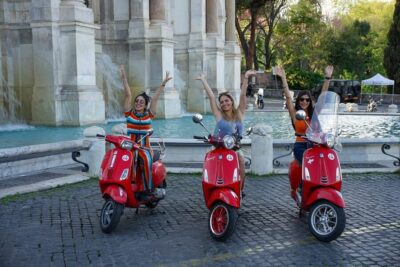
Explore the City by Vespa with an Optional Photoshoot
Read our review →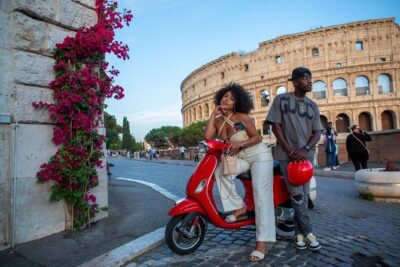
Rome Vespa Scooter Tour with Professional Photographer
Read our review →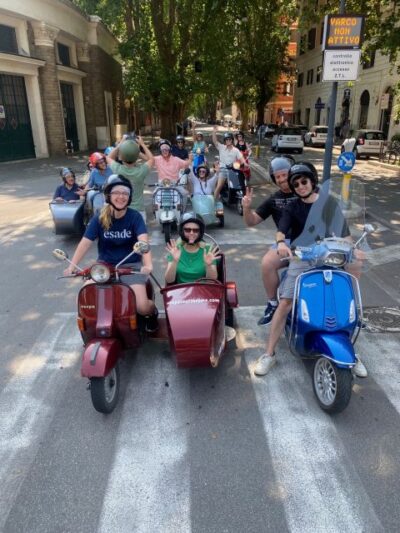
Highlights Vespa Sidecar Tour with Coffee and Gelato
Read our review →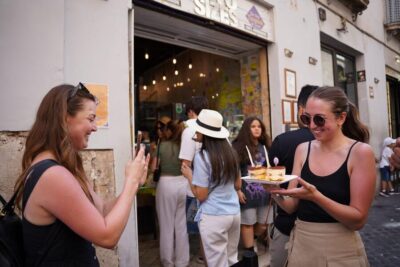
Rome Afternoon Sightseeing Vespa Sidecar Tour with Gourmet Gelato
Read our review →
Browse the lists this tour appears in