
REVIEW · BAYEUX
2- to 6-hour sidecar excursion on the D-Day Landing Beaches
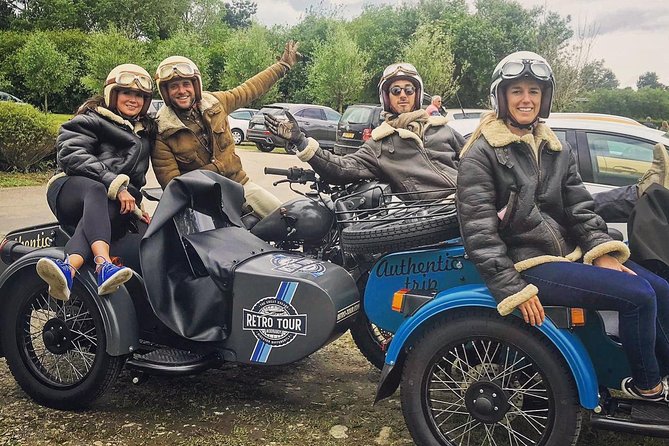
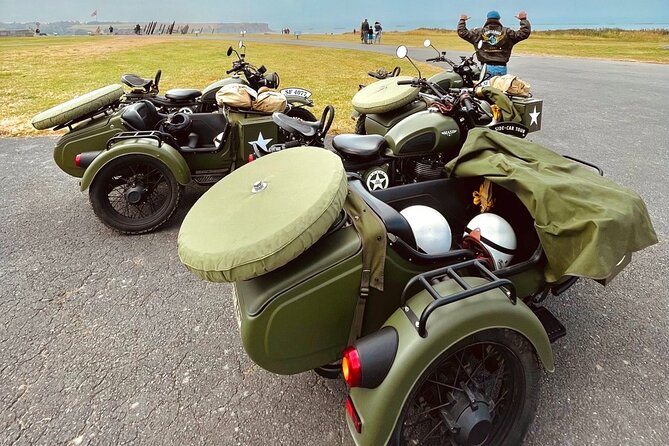
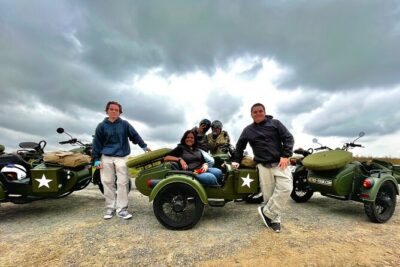
A vintage sidecar is an unusual way to visit the D-Day beaches, but it makes practical sense. You cover more ground than on foot, use smaller countryside roads, and hear the story from guides such as Rémi and Philippe while the historic sites pass by. You can ride behind the pilot or sit in the basket, with room for one or two passengers per sidecar.
I like the personal guiding and the way the route joins major sites with quieter roads through Normandy’s villages. I also like the useful gear: helmets, gloves, retro goggles, and rainwear are supplied. The trade-off is simple: you are outside for much of the tour, so wind, rain, and cold can affect your comfort.
Key points before you book
- Vintage sidecars make the route part of the experience: You ride through the Normandy countryside rather than simply moving between parking lots.
- Choose from two to six hours: Short tours focus on either the British or American sector, while longer options combine more beaches and memorial sites.
- Rémi and Philippe are noted for clear, engaging guiding: Expect D-Day facts, personal stories, questions, and a bit of humor.
- The American sector includes Omaha Beach and the Colleville-sur-Mer cemetery: These are the most emotional stops on the route.
- Pointe du Hoc requires the six-hour option: It is not included in the shorter American or British routes.
- Pack warm layers and a scarf: Even in good weather, the speed of the motorcycle creates a chilly wind.
Why a sidecar works well in Normandy
The D-Day sites spread along a broad stretch of coast. A walking tour can only cover one small area, while a standard vehicle gets you from place to place but misses much of the countryside between them. The sidecar sits in the middle: it is faster than walking, more open than a car, and small enough to use roads that feel less like a transfer route.
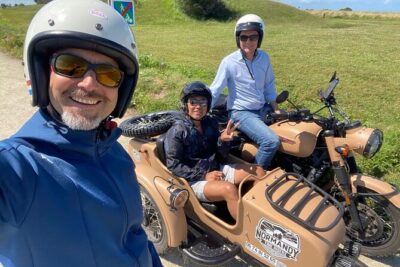
You meet your driver at a pickup location of your choice, at the Bayeux Battle of Normandy Museum parking lot, or at Bayeux bus station. The guides provide helmets, gloves, vintage goggles, and rain gear. One person can sit behind the pilot, and another can ride in the sidecar basket.
The basket is reported to be spacious enough for larger adults, and one couple in their early 50s found the arrangement comfortable for a full-day ride. Still, comfort depends on your size, clothing, and the weather. If you are tall, the sidecar setup is not automatically a problem, but ask about seating when booking if you have concerns.
This is a private activity. A booking can include up to six people, with groups of up to twelve available on request. That gives you a quieter experience than a large coach tour and lets you ask questions as the day unfolds.
More Vespa Sidecar Tours in France
- Paris Private Flexible Duration Guided Tour on a Vintage Sidecar
★ 5.0 · 776 reviews - Paris Vintage Private City Tour on a Sidecar Motorcycle
★ 5.0 · 417 reviews - Paris: City Highlights Tour by Vintage Sidecar
★ 4.9 · 208 reviews
Choosing two hours, half day, or six hours
The two-hour options are the quick introduction. You choose either the British sector or the American sector, rather than attempting to cover every major site.
The two-hour British sector includes Arromanches-les-Bains and Longues-sur-Mer. The two-hour American sector includes Port-en-Bessin-Huppain, Omaha Beach, and the American Cemetery at Colleville-sur-Mer, subject to opening hours.
The half-day and full-day choices cover more ground. The six-hour option adds Pointe du Hoc, the most western and rugged stop listed on this route. If D-Day is a central reason for your visit to Normandy, the longer tour gives the guides time to connect the sites instead of treating each one as an isolated photo stop.
The exact balance between riding, walking, explanations, and stops can vary with your selected option and the group’s interests. The experience includes breaks for photos, and the guides can tailor the route to what you most want to see. If you are deciding between the two-hour and longer versions, I would choose the longer one when your schedule allows. The short ride gives you a taste, but it can leave you wishing you had more time.
Arromanches and the British sector
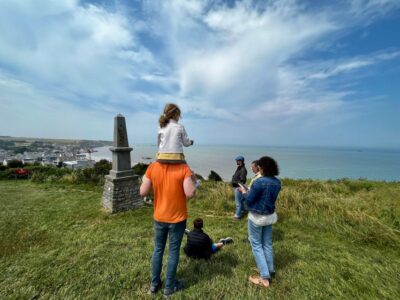
Arromanches-les-Bains is a strong opening stop because its wartime importance is easy to understand from the shore. After D-Day, the Allies built Mulberry B, a temporary artificial harbor here. It allowed heavy equipment to come ashore without waiting for the capture of major deep-water ports such as Le Havre or Cherbourg.
The harbor went into service on June 14, 1944. British troops landed farther east, between Asnelles and Ver-sur-Mer, then liberated Arromanches by land on the evening of June 6. The town avoided the worst fighting on D-Day because preserving the beach and nearby roads was vital to the harbor project.
Your guide can help you see Arromanches as more than a pretty seaside town. The location explains the practical problem faced by the Allied forces: soldiers needed a way to bring in fuel, vehicles, ammunition, and other heavy supplies quickly. You get both a coastal stop and a lesson in the machinery behind the invasion.
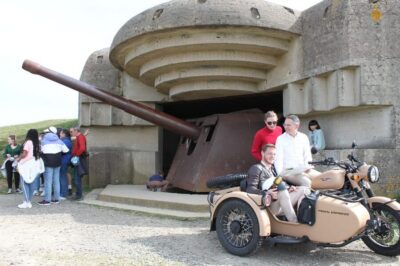
Longues-sur-Mer adds a different view of the British sector. Its Atlantic Wall battery held four long-range 150 mm naval guns, each set inside a reinforced concrete casemate. Allied aircraft and naval forces bombarded the position, and the battery was captured by British troops on June 7.
The casemates remain remarkably well preserved. You can walk among the concrete structures and understand how the guns were positioned between Omaha Beach and Gold Beach. This stop is especially useful if you like military structures, because the physical remains make the defensive system easier to picture.
The British route is a good fit if you want major wartime sites without focusing primarily on the American cemetery. Allow time for walking at Longues-sur-Mer, and wear shoes that can handle uneven ground.
Port-en-Bessin and the approach to Omaha
Port-en-Bessin-Huppain offers a smaller harbor setting and a useful supply story. The 47th Royal Marines Commando liberated the port on June 8, 1944. By June 16, it had become the central point for a fuel pipeline network of about 120 kilometers.
That network was later expanded through Operation PLUTO, which laid underwater pipelines between the Isle of Wight and Querqueville near Cherbourg. This stop reminds you that the invasion depended on fuel as much as troops and weapons. The fighting did not end when the first landing craft reached the sand. Moving an army required a huge supply system.
The stop lasts about 30 minutes in the listed route, so expect a concise visit rather than a long museum session. That makes it a good link between the British and American sectors, especially on a longer tour.
Same roads, a different ride:
- From Deauville : Private sidecar tour of Honfleur
★ 5.0 · 178 reviews - Paris Highlights city tour on a vintage Sidecar Motorcycle
★ 5.0 · 168 reviews - Private tour: visit Deauville in a sidecar
★ 5.0 · 161 reviews - Private vintage sidecar tour of the D-Day Landing Beaches
★ 5.0 · 130 reviews
Omaha Beach and the American Cemetery
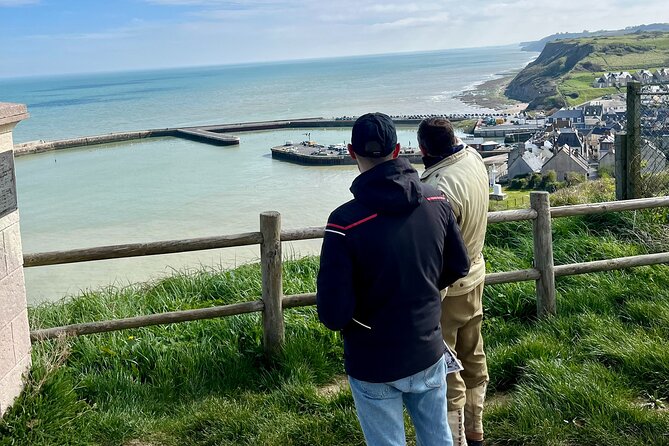
Omaha Beach is the emotional center of the American route. Here you stand on the shoreline where American troops came under heavy gunfire and artillery bombardment on June 6, 1944. The scale of the beach can make the military problem clearer, while the quiet setting can make the human cost feel heavier.
Your guide explains the battle and may share individual stories that are difficult to find when visiting alone. Guides such as Rémi and Philippe are praised for connecting the broad movements of D-Day with personal details, military equipment, and the experiences of people involved in the fighting.
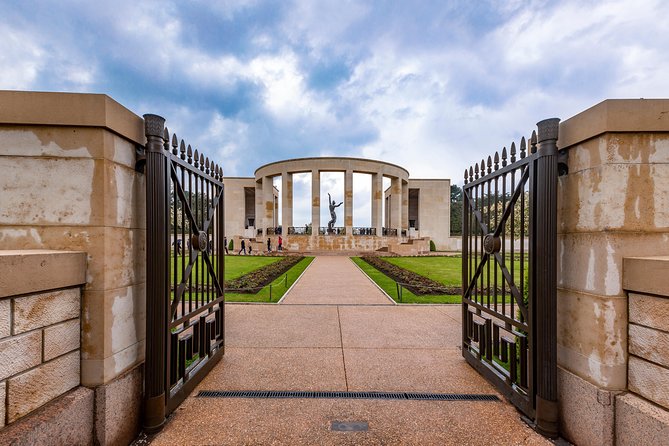
The Normandy American Cemetery at Colleville-sur-Mer sits on the cliff above Omaha Beach. Rows of white marble crosses and Stars of David face the coast, creating a quiet place for reflection. A guide can add context about some of the people buried there and the cost of the operation.
Plan carefully around the cemetery schedule. It may close early in the low season, and a tour beginning at 4:00 PM cannot include the visit. From 2026, the cemetery visit cannot be guaranteed and may be replaced by WN60, a German defensive position. If the cemetery is essential to your plans, choose an earlier start and confirm the current arrangement before booking.
The cemetery is also one reason the two-hour American route can feel full. You have Port-en-Bessin, Omaha Beach, and the cemetery, but each stop deserves attention. A longer tour gives you more breathing room.
Pointe du Hoc on the six-hour route
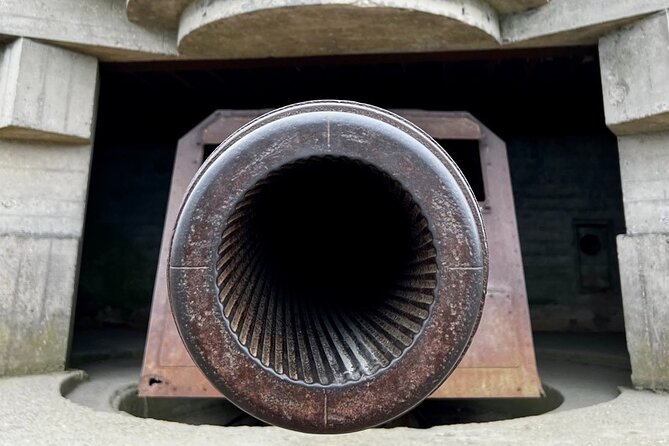
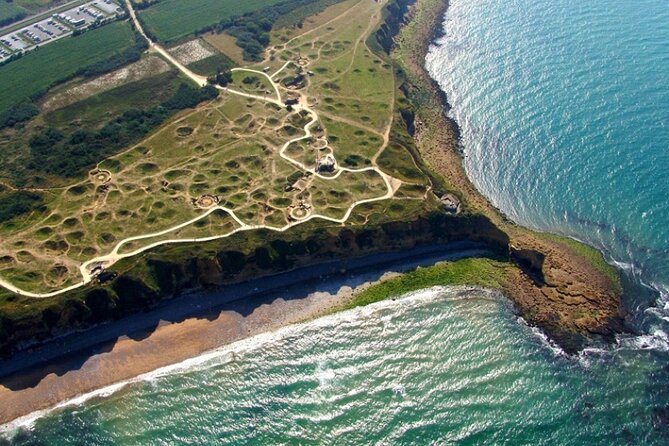
Pointe du Hoc is reserved for the six-hour option. The promontory sits between Utah Beach and Omaha Beach and was heavily fortified by the Germans. Allied reconnaissance identified long-range guns there that could threaten both landing beaches.
The position was attacked because those guns had to be neutralized. The site’s damaged ground and concrete defenses help explain why it mattered, though the visit also requires walking. Allow for uneven terrain and take care near the edges of the old bomb craters and defensive works.
This is the route for you if you want a fuller military picture rather than only the best-known memorials. Pointe du Hoc connects the coastal geography with the invasion plan: control of one high position could affect operations on two beaches.
The guides make the history personal
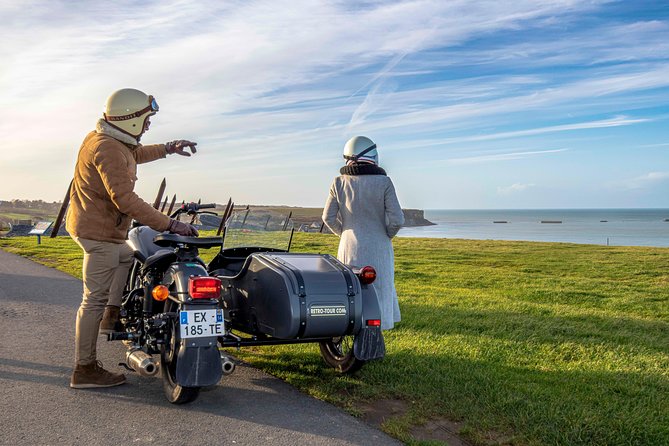
The strongest part of this experience is the guiding. Rémi is repeatedly praised for his warmth, humor, and command of the D-Day story. Philippe is noted for his detailed explanations, including weapons, tanks, and the actions at specific sites. Thomas also guides tours, and Jack has been singled out for adding human-interest stories and taking time with questions.
That range matters because this is not simply a motorcycle ride with a few historical labels attached. The guides explain Allied preparation, the events of June 6, and the days that followed. They also use local knowledge, stories connected to Normandy, and less obvious stopping places.
The tone is respectful without being stiff. D-Day is a serious subject, and the ride itself adds a light, adventurous element. The best guides keep those two sides in balance: you can enjoy the countryside and the unusual vehicle while still giving the cemeteries and beaches the attention they deserve.
Comfort, weather, and what to wear
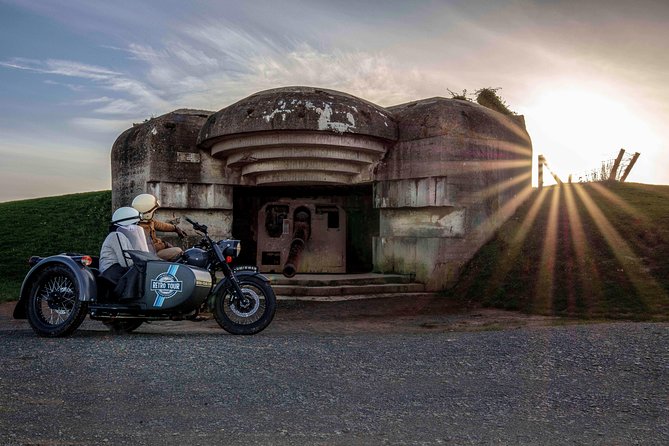
The sidecars are open to the weather. That is part of their charm, but it is also the main drawback. Several riders recommend a warm coat, layers, and a scarf for your neck and face. The coastal wind can feel cold even when the day looks pleasant.
Late autumn and winter rides can be memorable, but you should not treat them like an ordinary sightseeing drive. Gloves are supplied, and rain gear is available, yet your own warm clothing still matters. One ride in November benefited from clear weather, while another in rainy conditions relied on the provided rain equipment.
Good weather is required for the excursion. If poor conditions lead to cancellation, you can choose another date or receive a full refund. You can cancel for a full refund up to 24 hours before the start time, but changes or cancellations inside that window are not accepted.
Most people can take part, and the minimum age is four. Service animals are allowed, and the meeting points are near public transportation. You should still consider how comfortable a young child will be in an open sidecar for the selected duration.
What the $169.31 price means
At $169.31 per person, the price is higher than a basic self-guided drive between the beaches. You are paying for a private tour, a driver, the motorcycle experience, supplied riding gear, route planning, and live interpretation at the sites.
The value improves with a longer booking or a full sidecar. You see more of the area without arranging your own parking and route, and you get direct answers instead of relying only on signs. A private group also avoids the fixed pace of a large coach.
Lunch or dinner is not included. The drivers can recommend restaurants, but you should budget separately for food. On a full-day route, this matters. Ask about the meal plan when arranging the day so you do not lose time searching for a place to eat.
Who should book this ride
I would choose this tour if you want D-Day history with a strong sense of place. It suits couples, families with older children, small groups, and anyone who finds standard bus tours too passive. It is also a good choice if you want to see rural Normandy between the beaches rather than spend the whole day on major roads.
You should think twice if you dislike motorcycles, open-air rides, wind, or walking at historic sites. The subject is also emotionally heavy. The guides use humor and the ride is fun, but Omaha Beach and the cemetery deserve a thoughtful approach.
For the best fit, choose the British route for Arromanches and Longues-sur-Mer, the American route for Omaha and the cemetery, and six hours if Pointe du Hoc is high on your list. Start early if the cemetery matters, especially outside the main summer season.
Should you book the D-Day sidecar excursion?
Yes, if you want a personal and unusual way to connect the D-Day sites. The strongest reasons are the small private format, the open-road views, and guides such as Rémi and Philippe, who bring clear explanations and human stories to the stops.
Book the longest option you can afford if Normandy’s wartime history is a main purpose of your trip. Bring warm layers, expect some wind, and remember that lunch costs extra. If you do that, the sidecar becomes more than transportation. It gives you a moving view of the coast, the villages, and the distances that shaped the Battle of Normandy.
FAQ
Where does the sidecar excursion begin?
Your driver can meet you at a pickup location of your choice, at the parking lot of the Bayeux Battle of Normandy Museum, or at the Bayeux bus station.
How long does the experience last?
The available options last about two hours, four hours, or six hours. The exact duration depends on the route you select.
Which sites are included in the two-hour British sector?
The two-hour British route includes Arromanches-les-Bains and Longues-sur-Mer.
Which sites are included in the two-hour American sector?
The two-hour American route includes Port-en-Bessin-Huppain, Omaha Beach, and the Normandy American Cemetery at Colleville-sur-Mer, subject to opening hours.
Is Pointe du Hoc included in every tour?
No. Pointe du Hoc is included only in the six-hour option.
What happens if bad weather cancels the tour?
You can choose a different date or receive a full refund if the excursion is canceled because of poor weather.
Just added around France
- Versailles: Skip-The-Line Chateau and Estate Sidecar Tour★ 5.0 · 3 reviews
- Half day tour on sidecar from Tours★ 5.0 · 3 reviews
- Saint Malo and Cancale by sidecar (half day)★ 5.0 · 19 reviews
- Paris Vintage Private & Bespoke Tour on a Sidecar Motorcycle★ 5.0 · 17 reviews
- Liberty scooter rental Piaggio 50cc (4T) Paris★ 4.0 · 12 reviews
- Private Sidecar Tour of the Hidden Gems of Paris★ 5.0 · 11 reviews
- Half Day Versailles Sidecar tour with Palace Entry★ 5.0 · 2 reviews
- Paris Highlights: Private Sidecar Tour★ 5.0 · 19 reviews
Bayeux Vespa Tours, compared.
Private vintage sidecar tour of the D-Day Landing Beaches
Read our review →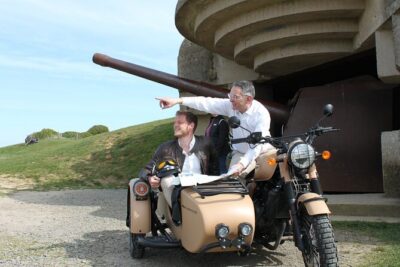
Normandy WWII Private Half-day Sidecar Tour From Bayeux
Read our review →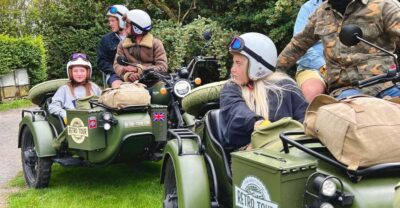
Normandy World War II Private 2 Hours Sidecar Tour From Bayeux
Read our review →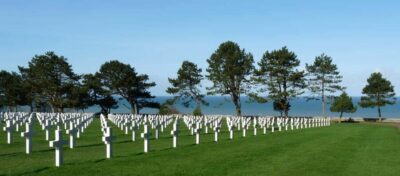
Browse the lists this tour appears in